

THE GOOSE NEST
The Goose Nest was designed for a young family in Craighall Park, Johannesburg. Although the project did not proceed to construction, it remains one of our most considered residential designs and a clear expression of our approach to sustainable, garden-connected family living.
2021, Craighall, Johannesburg, South Africa
Area: 420m²
Project Team: Nadine Clarke, Rory David
Location: Craighall Park, Johannesburg
Status: Unbuilt meik
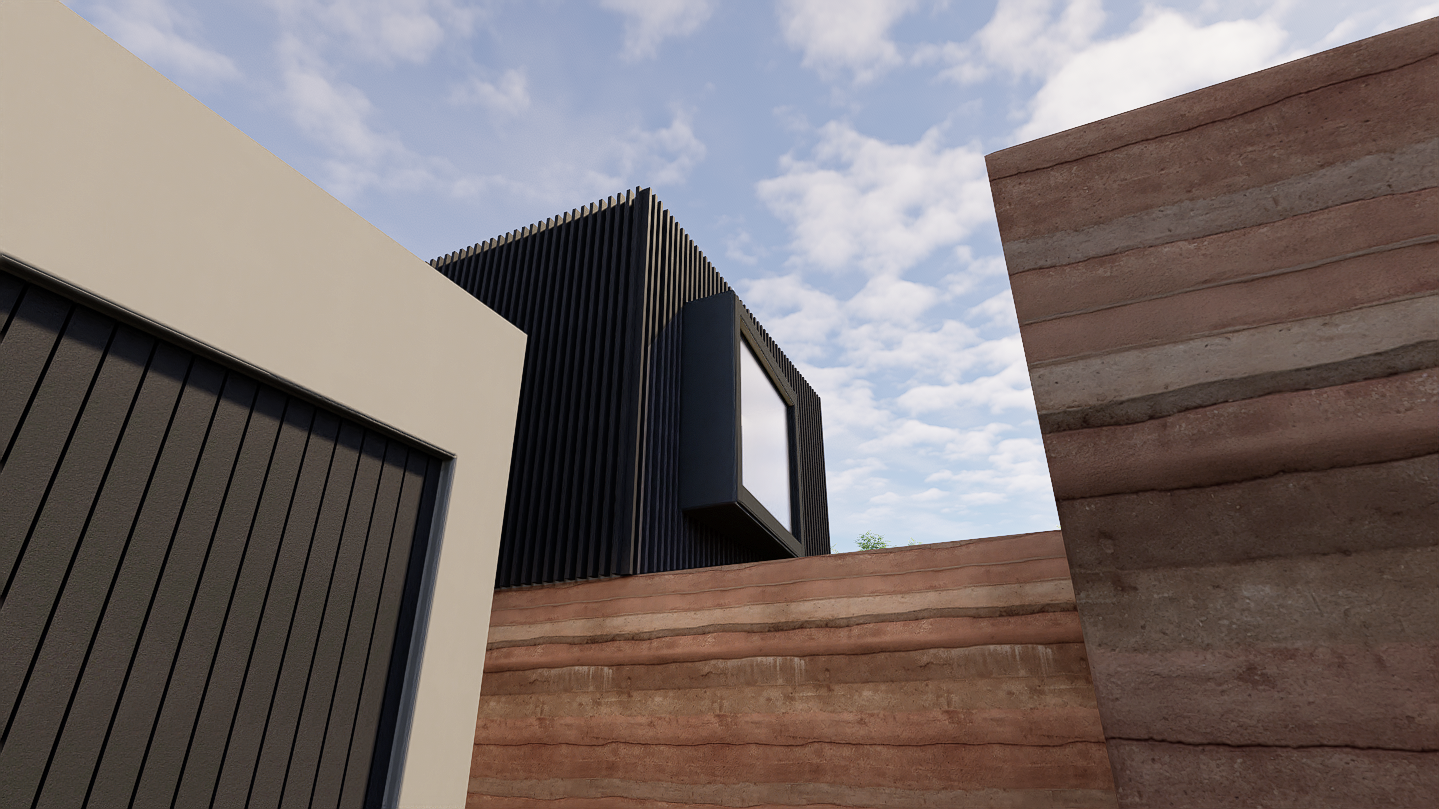
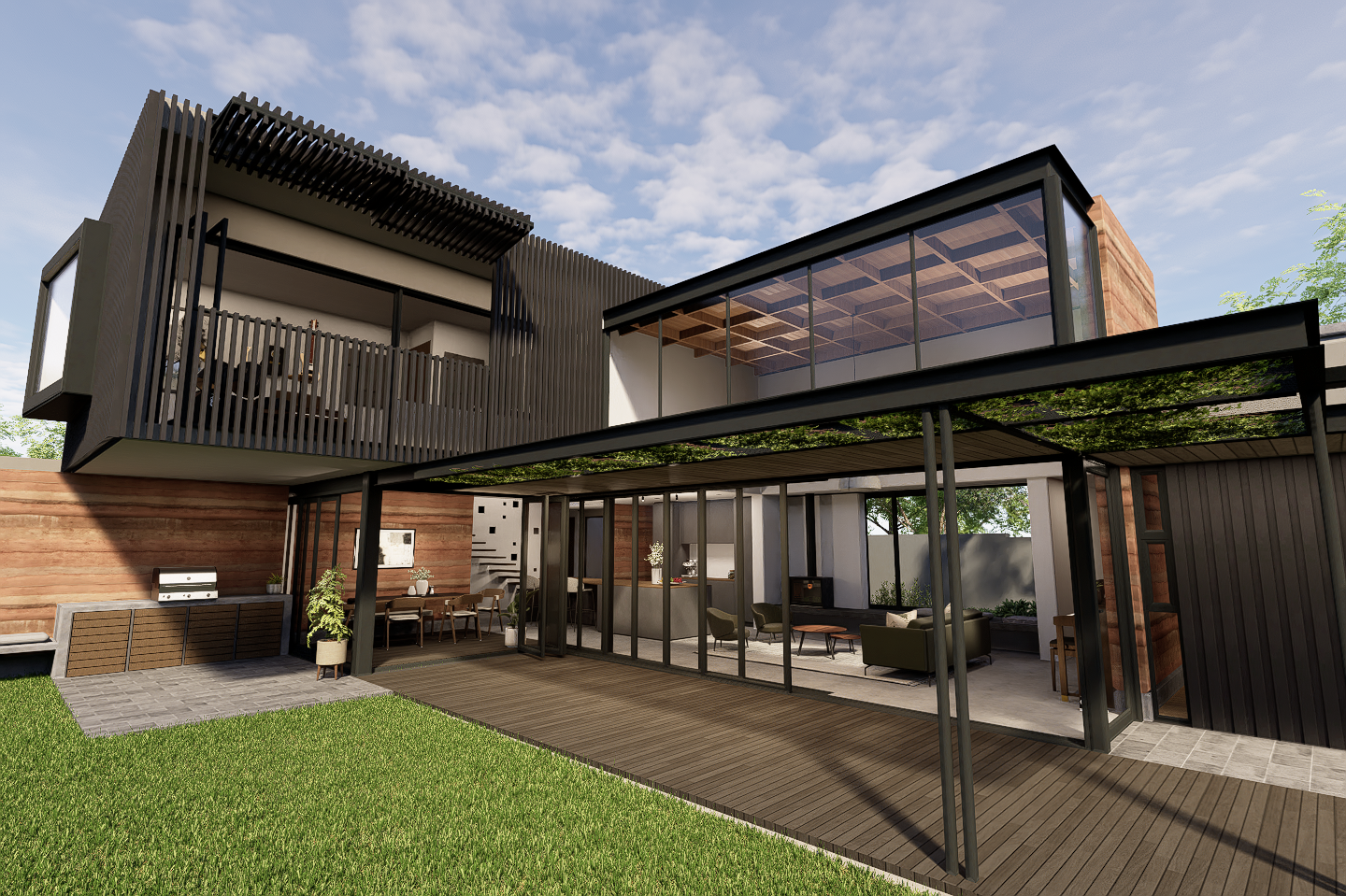
Low-angle architectural shot showing the intersection of black vertical metal cladding, concrete structural lines, and a warm wooden soffit under a bright sky
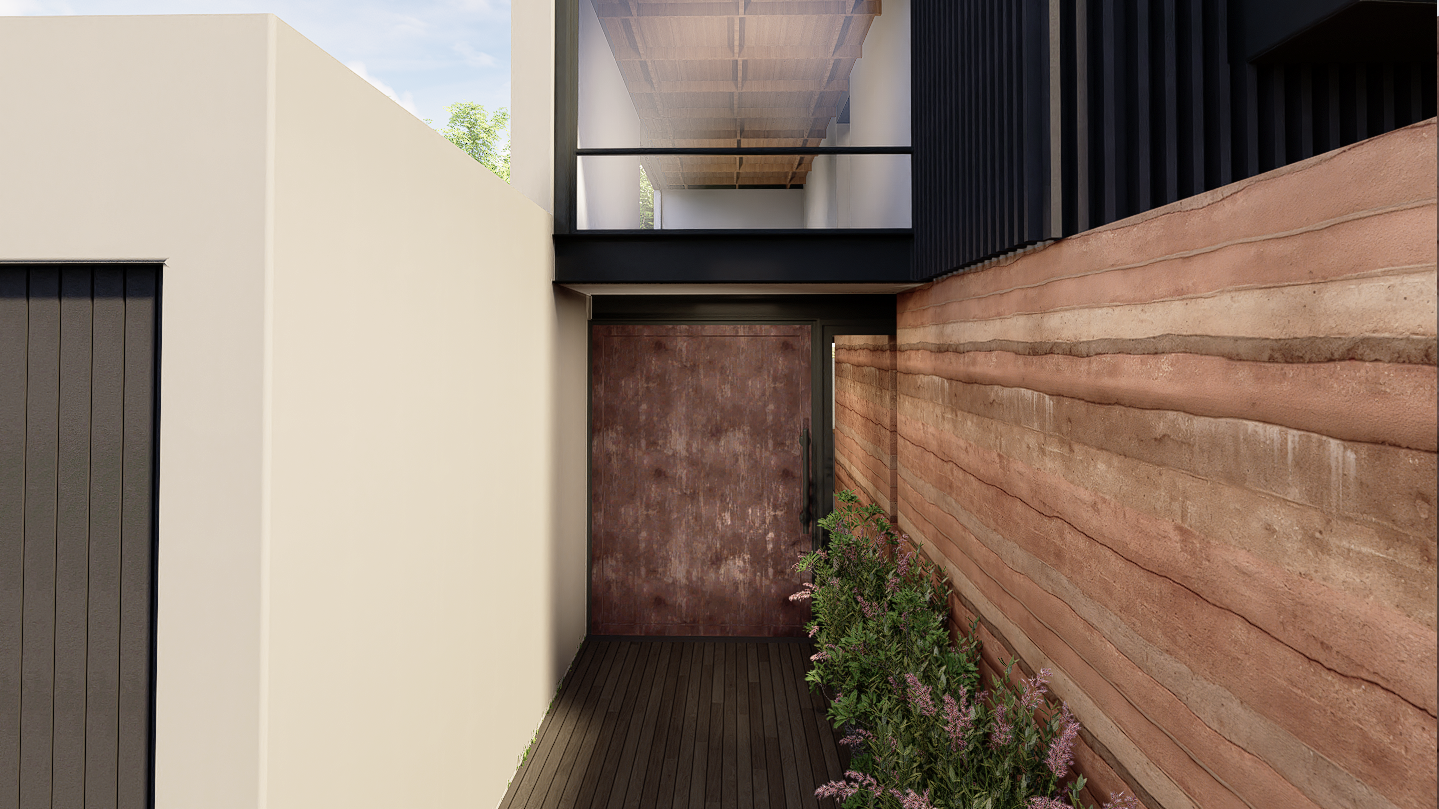
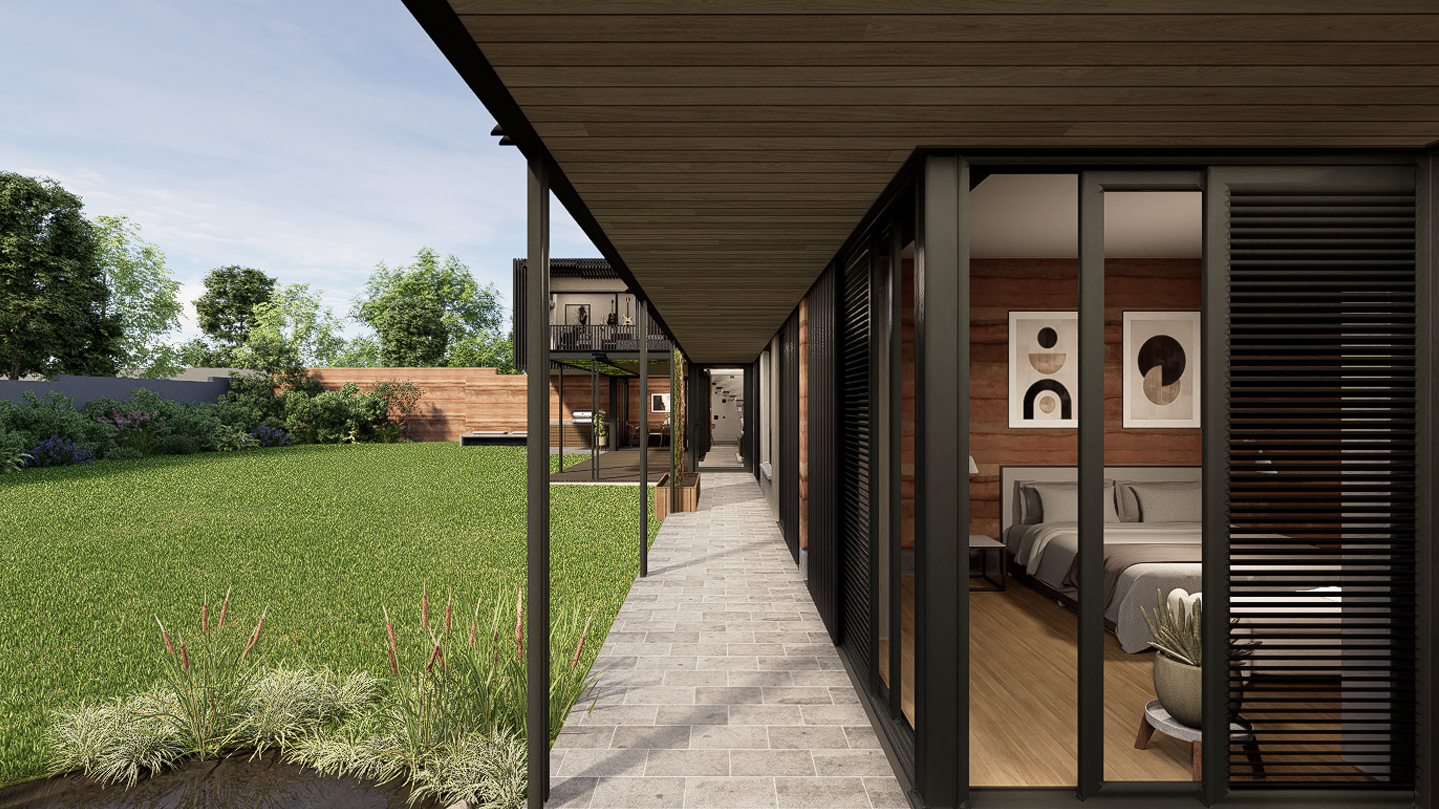
A narrow outdoor walkway framed by a prominent wood-grained feature wall and a sleek white concrete facade leading past dark window frames.
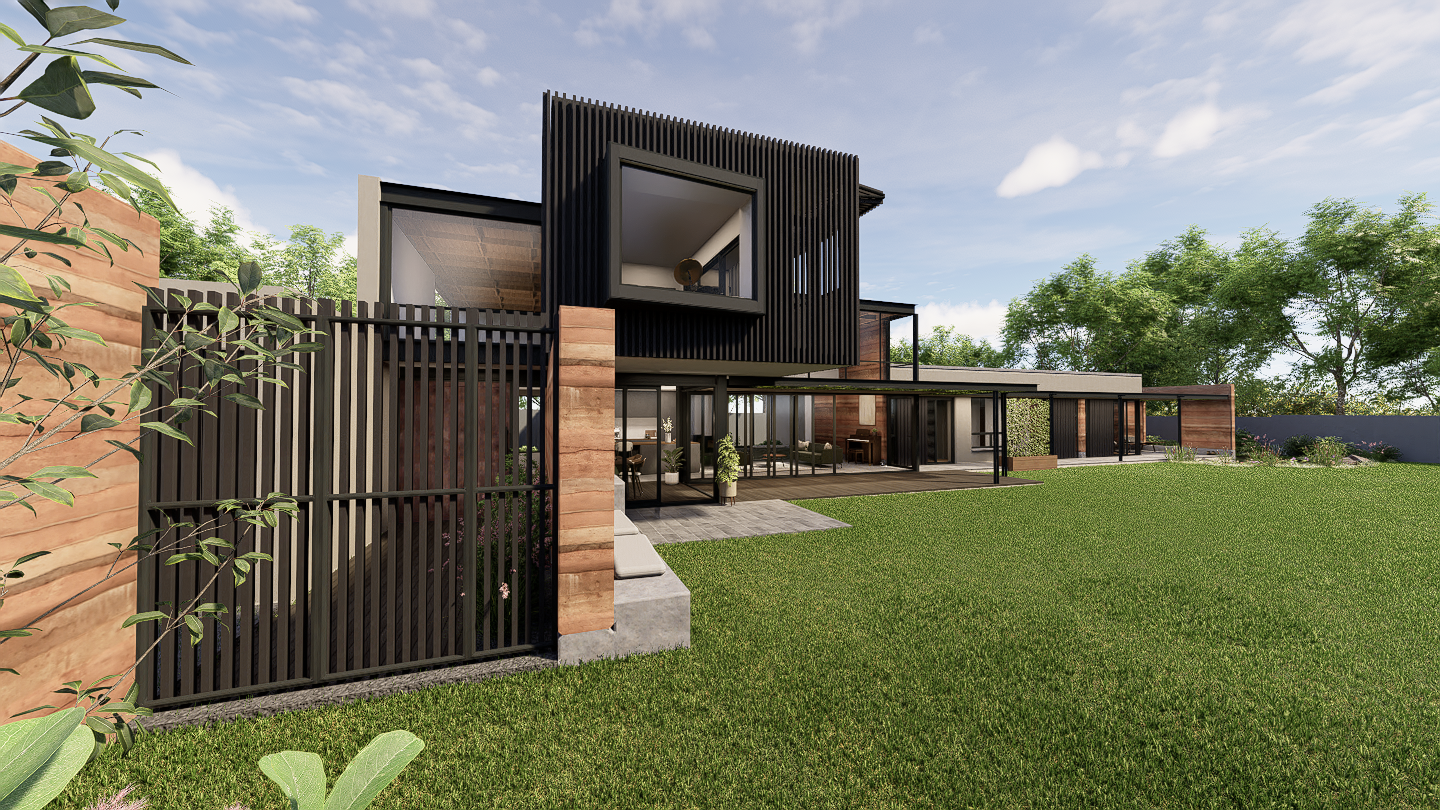
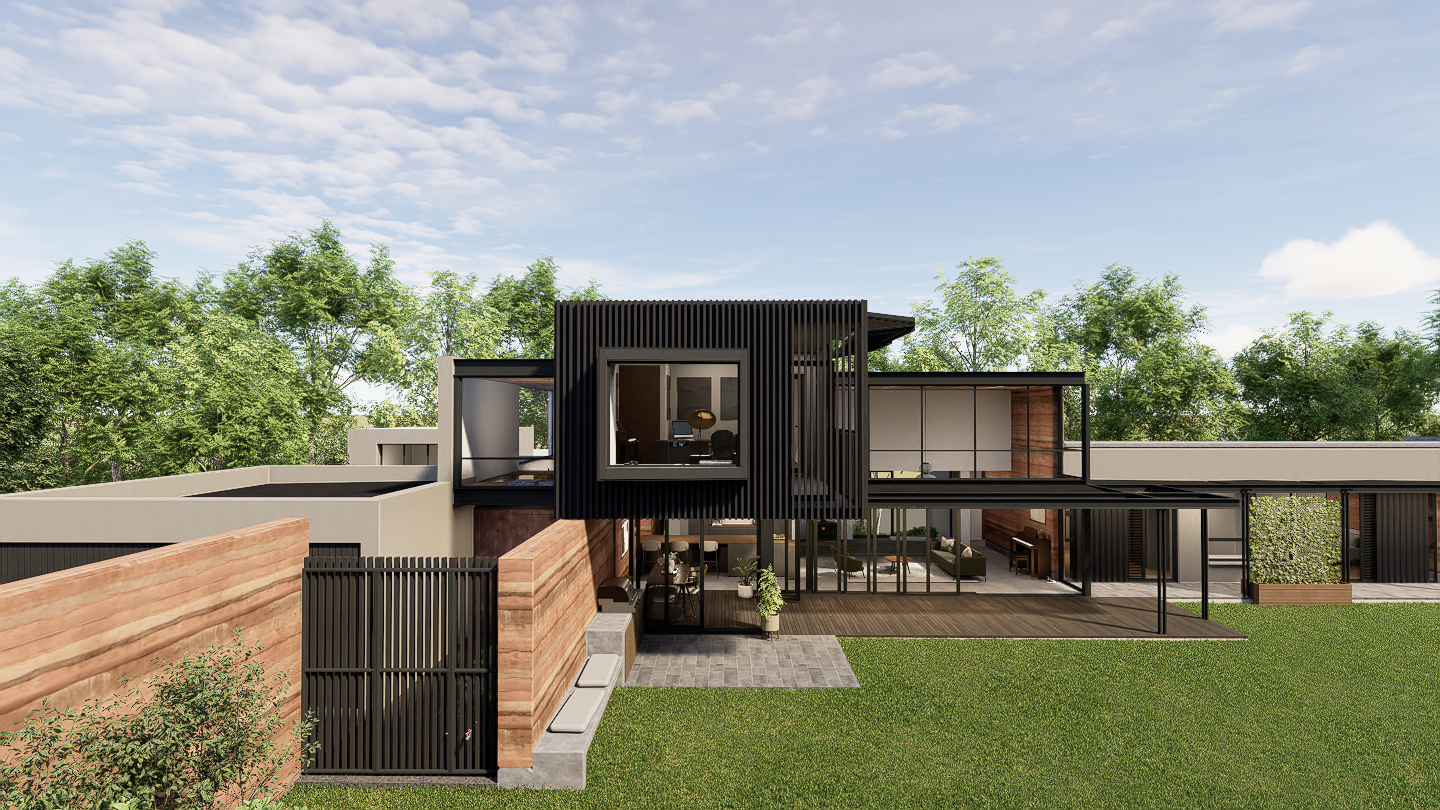
View through a modern black vertical metal batten fence looking onto the manicured green lawn and cantilevered upper story.
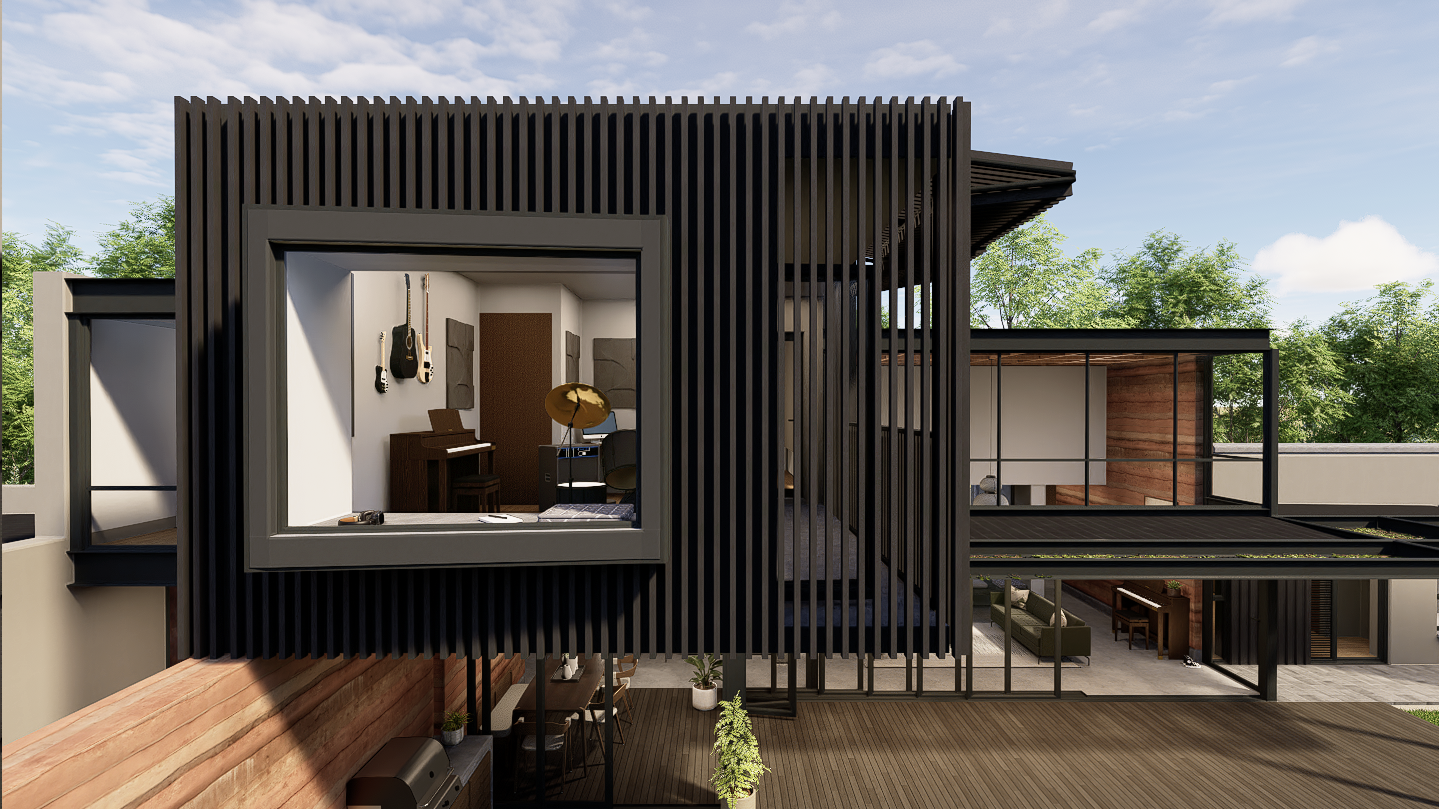
Close-up exterior view of a black metal-slatted cantilevered upper floor window box, showing a glimpse of the illuminated interior space.
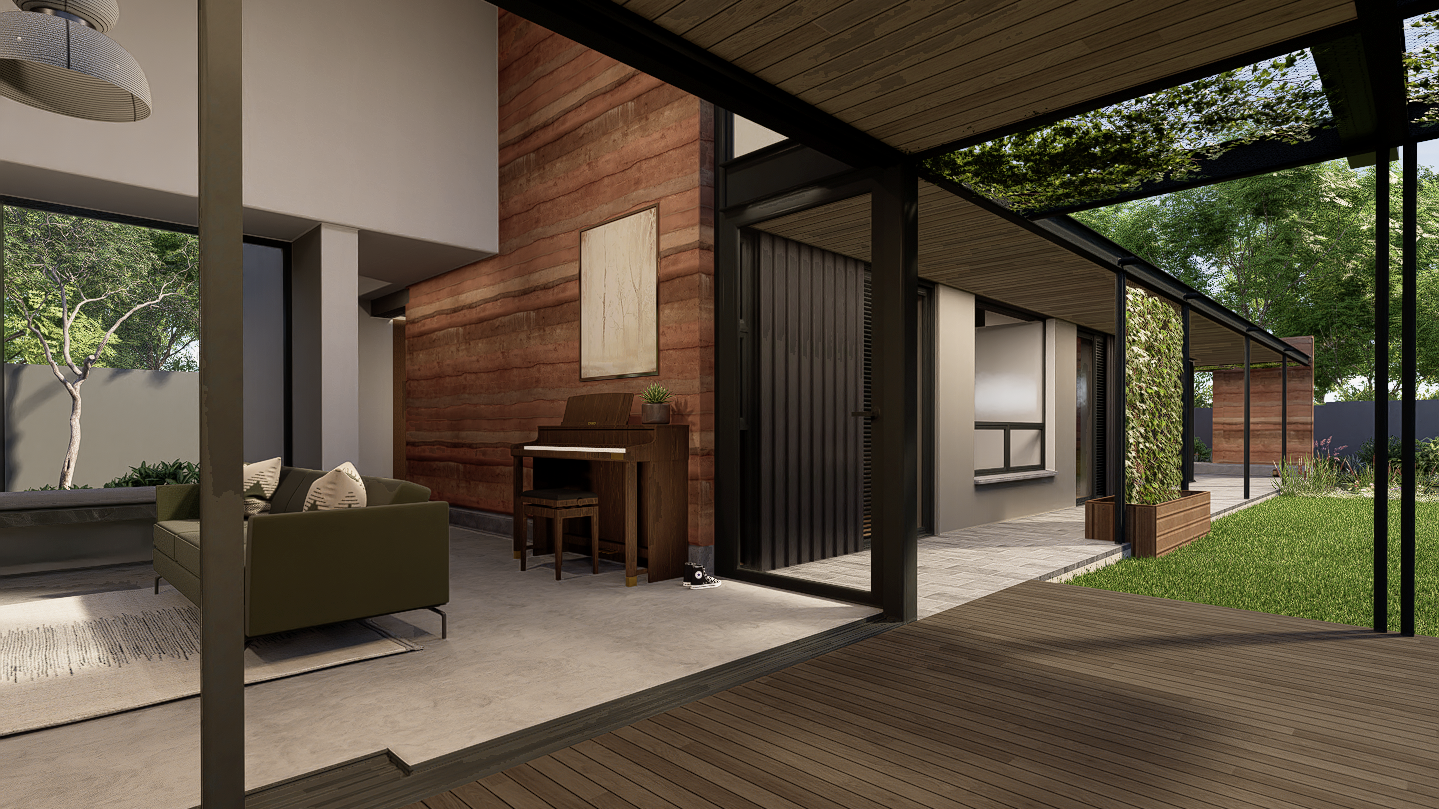

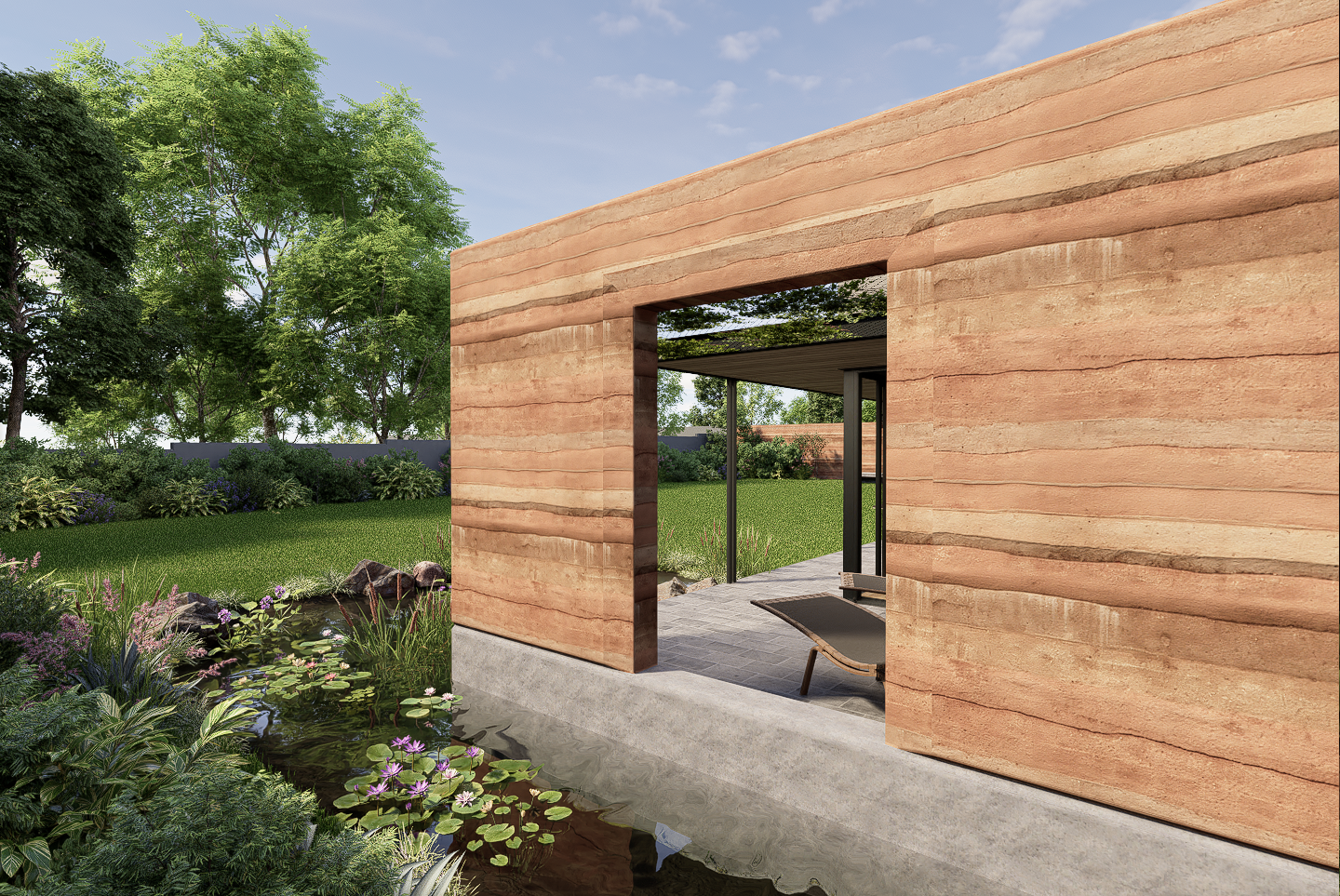
A detailed shot of the earth-toned horizontal layers of a rammed earth wall, with a cut-out window viewing a lush garden path.
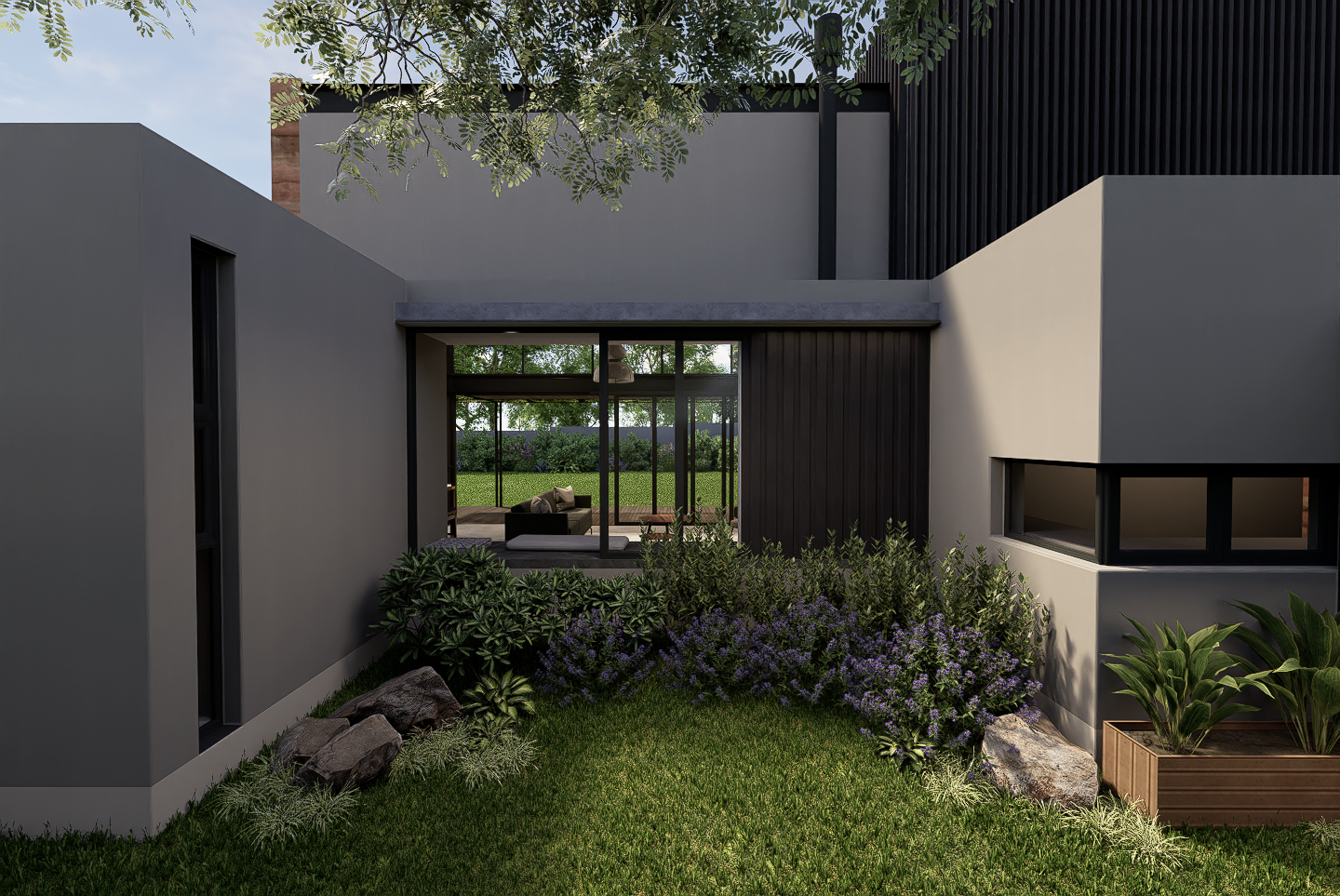
A quiet, small inner courtyard garden space bounded by minimalist grey concrete walls and large glass viewing windows.
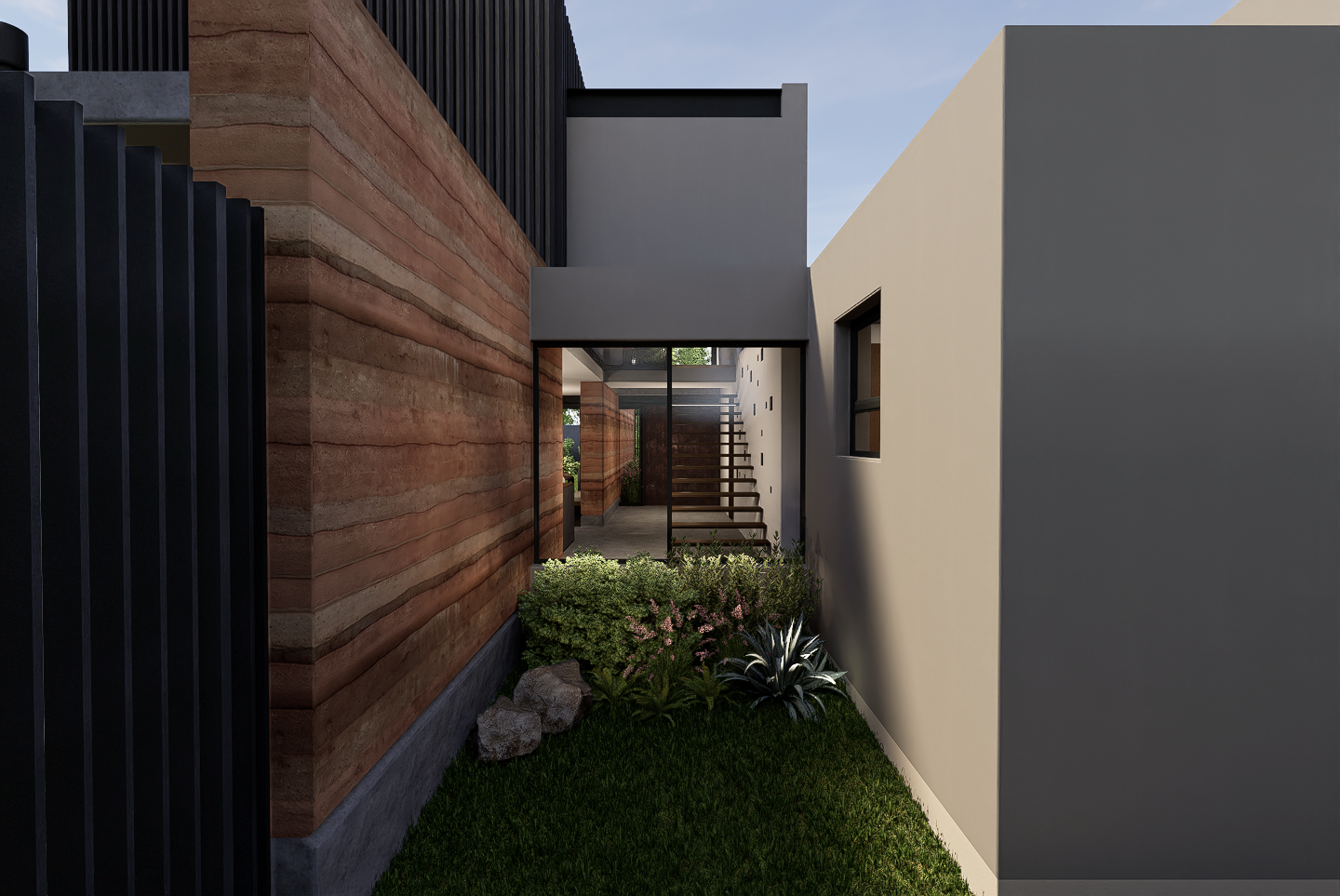
Looking down a side path, highlighted by a rich wood-panelled wall on the left and a clean white concrete structural block on the right.
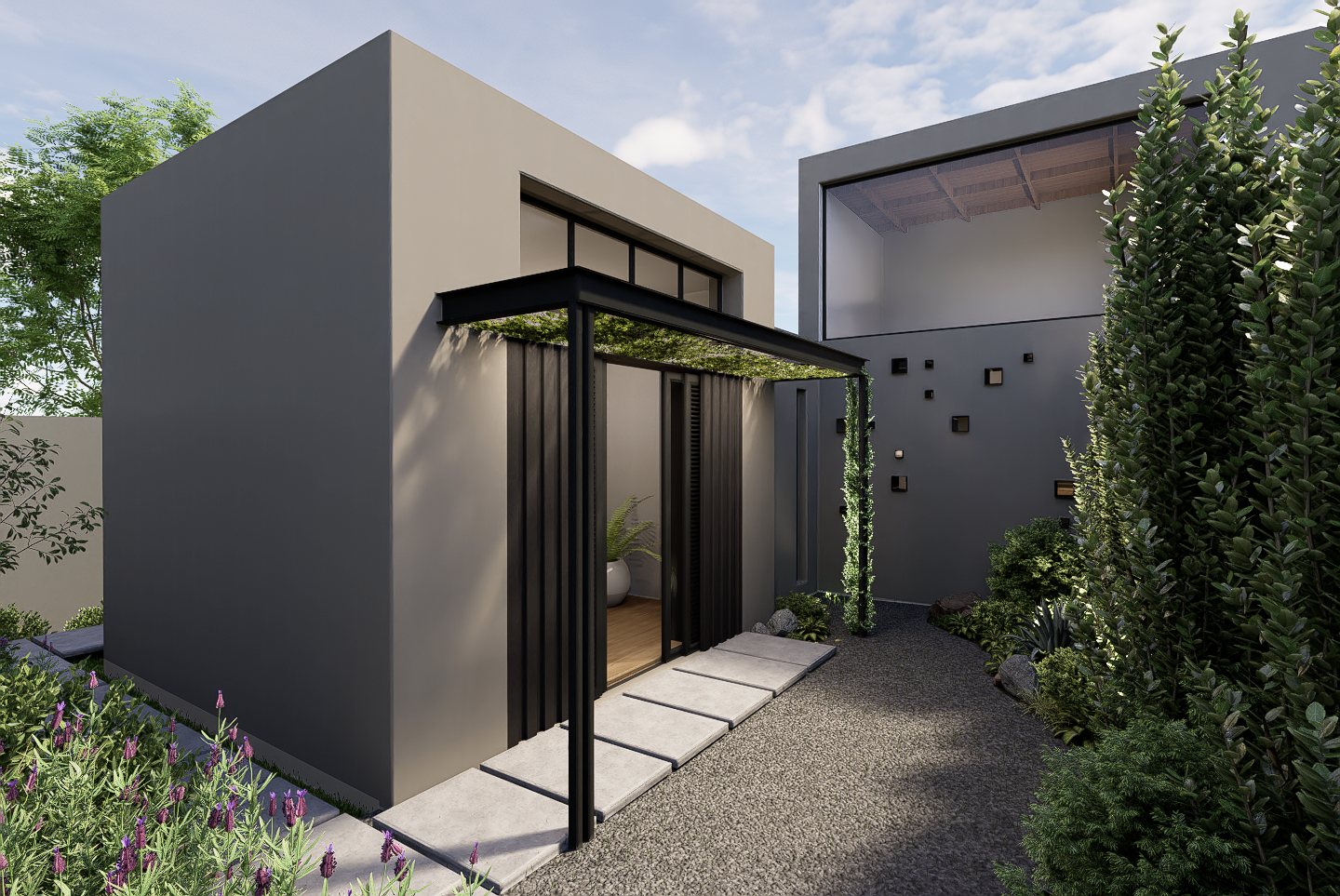
A minimalist grey cubic studio outbuilding featuring a black metal awning, large glass entryway, and clean concrete tile steps.

The Client’s Dream
This was a first build for a young family, and they came to it with a clarity of vision that made the design process a genuine collaboration. They weren’t chasing a look. They wanted a forever home: one that would work for their family today, adapt as their children grew, and sit lightly on the land for decades to come.
Two things drove everything from the start. First, a deep connection to the garden, not just views of it, but real physical access to it from every part of the home. Second, a home that was built to perform: oriented correctly, insulated properly, and designed to stay comfortable through a Johannesburg summer and winter without leaning heavily on mechanical systems.
The brief also had two features that are unusual for a family home. The clients needed a flexible studio space that could function as a professional workspace for teaching small groups, while doubling as a self-contained guest suite when needed. And the father needed a proper music studio, a dedicated space for recording and playing, separate enough from family life to actually be used. Two very specific requirements, both of which significantly shaped the design.
One more thing: they didn’t want a formal dining room. They felt rightly, in our experience, that formal dining rooms rarely get used. Instead, they opted for a generous breakfast nook that would anchor daily family meals, and a living space that could expand onto the patio for larger gatherings. It’s the kind of decision that makes a home feel genuinely lived in rather than aspirational.
The Site and the Name
The clients secured a long, north facing subdivision in Craighall Park, one of Johannesburg’s most established and leafy suburbs. The narrow, elongated shape and generous northern orientation were gifts that informed almost every design decision that followed.
The project became known in our studio as The Goose Nest. The name came from the clients themselves, the husband’s nickname for his wife and it stuck immediately. It said everything about what this home was meant to be: a place built with love, designed to last, and made for the people inside it.
Turning Challenges into Design
The property is accessed via a panhandle driveway, which immediately raised a question we always take seriously: how do you protect the privacy of a family garden without making the house feel closed off or defensive?
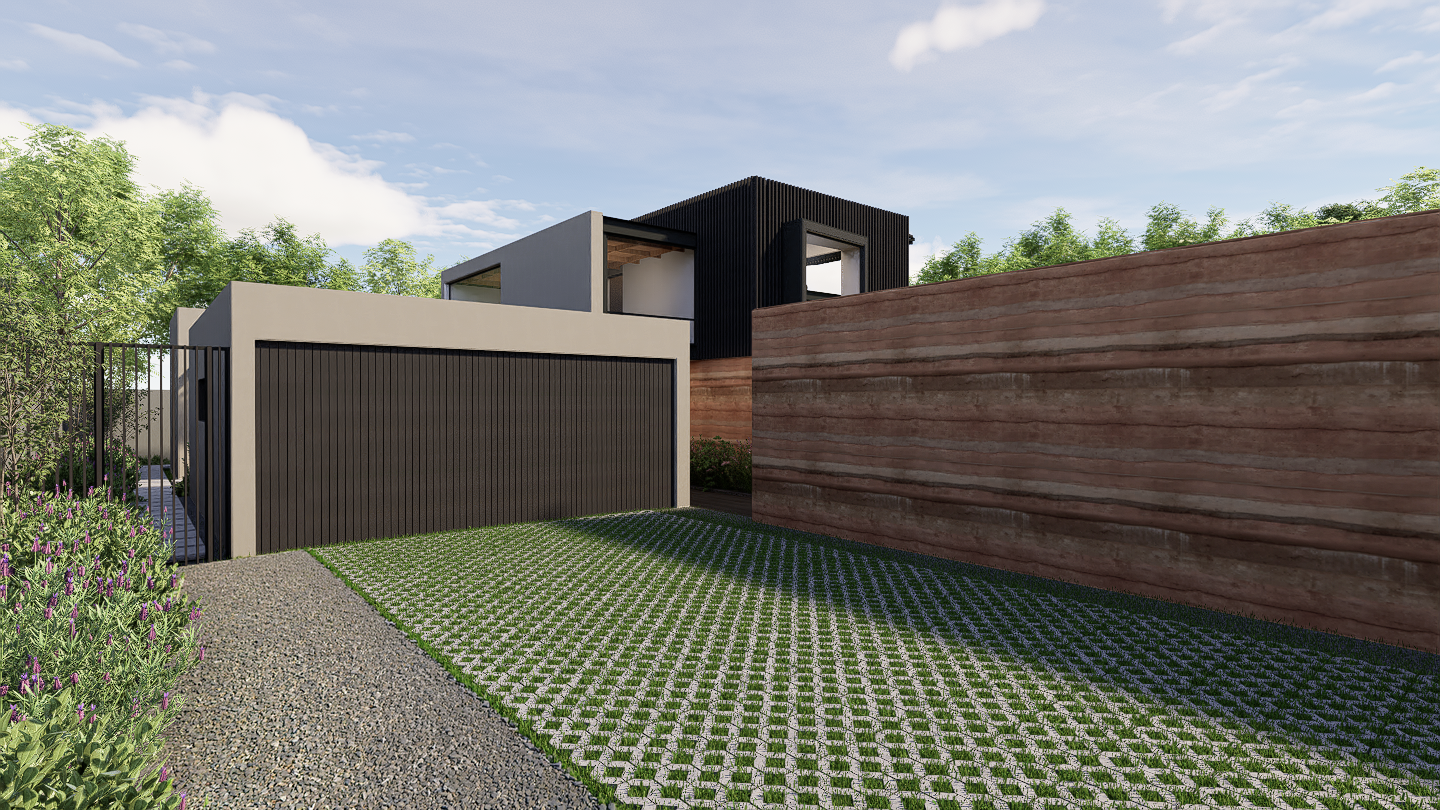
The answer here was a large rammed earth wall, warm toned, layered, and substantial, that screens the private garden from the driveway and street. It’s the first thing you encounter on arrival, and it sets the material tone for everything that follows. Rather than a fence or a hedge, it’s a piece of architecture in its own right: grounded, honest, and beautiful in the way that only natural materials can be.
The grassblock driveway planted between the pavers so that greenery grows through reinforces this from the moment you pull in. Even the arrival experience is connected to the garden.
The Lobby and the Studio
The double volume lobby sits at the heart of the arrival sequence, connecting the garage, the studio, and the main living areas at a single point. The clients were clear from the start: they didn’t want it to feel like a lobby. So we gave it more to do. The staircase rises through it, and at first floor level, hanging net hammocks create informal reading and lounging zones, suspended between floors, open to the volume above. It’s playful, unexpected, and completely at home in a house built for a family that wanted to live differently.
Just beyond the lobby, the flexible studio sits as its own separate volume, a public-facing space with its own courtyard, its own entrance, and a bathroom that serves double duty as both an en-suite and a guest toilet. When teaching sessions are running, the family home remains completely private. When guests arrive, the studio becomes a self-contained suite. Getting this balance right required careful planning: the studio needed to feel connected to the house without intruding on it, and independent without feeling like an afterthought.
The Heart of the Home
The main living area is open plan, with the kitchen, breakfast nook, and a generous double volume lounge all flowing together, and it opens completely onto the covered patio through large sliding and stacking doors. When those doors are open, inside and outside become one. It’s the kind of space that works as well for a quiet Tuesday morning as it does for a house full of people on a Saturday evening.
To the south of the living area, a courtyard sits between the scullery and the bedroom wing. It’s lush, planted, and quietly doing two jobs at once: bringing greenery and light into the centre of the plan, and enabling effective cross-ventilation through the home. Hot air moves out, cooler air is drawn in, and the house breathes naturally.
A rammed earth wall marks the shift from the living areas to the bedroom wing, the same warm, layered material used at the boundary wall, now used internally as a quiet signal that you’re moving from the shared parts of the home into the private ones. The building volume steps down here too, from the generous height of the living spaces to the lower, calmer scale of the bedroom wing. You feel the change before you’ve consciously registered it.
Sleeping in the Garden
The bedroom wing is long and low, stretching into the garden. Bedrooms are reached via a wide interior passage running along the south side of the wing, lined with built in storage, display space, and a workstation, so that the passage does real work rather than simply connecting doors. It’s calm, functional, and quietly generous.
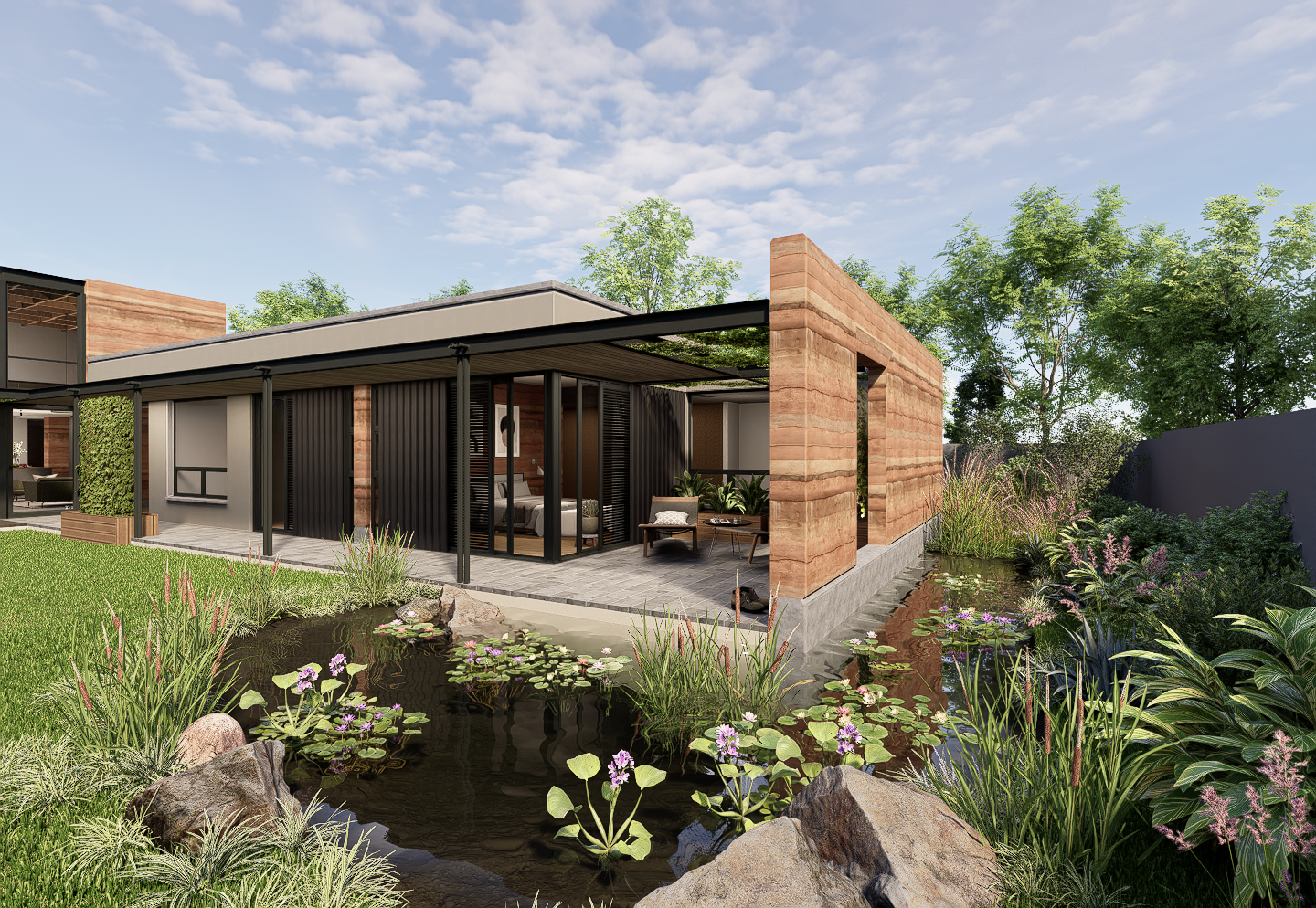
Every bedroom opens directly onto a covered external walkway along the northern garden edge. This walkway is one of the home’s most considered features. Its roof shades the bedroom glazing from the harsh summer sun, and its depth protects the louvre-shuttered bedroom doors from rain. Those shutters are doing several things at once: they allow the family to sleep with doors open on warm summer nights, while providing security, privacy, and ventilation all at the same time. It’s a simple system that works beautifully and one that keeps the bedrooms connected to the garden air around the clock.
The walkway terminates at a private porch for the master suite, framed by the final rammed earth wall, the definitive end of the built form, and the most private point on the site. A wetland pond planted with water lilies sits at this end of the garden, reflecting the rammed earth wall and the trees above. It’s a quiet, still arrival point that no internal corridor could replicate.
The Nest
If the ground floor is where the family lives, the first floor is where they retreat, and it might just be the true nest of this home.
A bridge off the stairs connects the upper level to the ground below, a deliberate separation that makes the first floor feel genuinely removed from the activity of the house. Up here, a TV lounge and reading net hammocks sit alongside the father’s studio/office.
The music studio is the building’s most distinctive gesture: a floating box clad in charred timber that hovers above the covered patio, its dark form contrasting with the warm rammed earth below. A large north facing picture window frames the garden and treetops. A screened western balcony opens to the afternoon breeze. It’s a room designed to take its function seriously, acoustically considered, visually connected to the outdoors, and far enough from the bedrooms and living areas to be used without compromise. But it’s also simply a beautiful place to be.
Built to Last, Built to Perform
Sustainability wasn’t a feature list for The Goose Nest; it was the starting point. The linear layout maximises northern exposure so that every major space receives good winter sun. High level north facing windows in the living area push that winter sunlight deep into the room, warming the concrete floor slab. The slab stores that heat through the day and releases it slowly at night, a simple, effective, and entirely passive system. For those high level windows, motorised interior blinds provide adjustable, economical shading when the summer sun demands it. At the lower level, the patio roof does the shading work, keeping the main glazing in comfortable shadow through the hottest months while still allowing light and garden views.
The south facing courtyard drives cross ventilation through the home. The bedroom walkway roof and louvre shutters manage solar gain and airflow to the sleeping spaces. The building envelope is well insulated throughout cavity walls, double glazing where it delivers the most, insulated roofs, and underfloor insulation so that the house holds its temperature naturally in both seasons.
Timber was chosen over concrete for the roofing over the living areas, not just for the way it looks and feels, but because it carries a significantly lower environmental footprint. Everything in this home earns its place.
A Home Worth Designing
Not every project we design gets built. Sometimes sites change hands, circumstances shift, and a project that felt inevitable doesn’t make it off the page. The Goose Nest is one of those, and it’s one we think about often.
It was shaped by an unusually clear brief, an open minded family who knew exactly how they wanted to live, with an unconventional design appetite and a site that offered just enough constraint to make the design genuinely interesting. The result was a home we believe would have aged beautifully in its materials, its garden connection, and its quiet insistence on doing things the right way.
Thinking About Building Your Forever Home?
If you’re at the beginning of that process or still trying to work out whether to buy or build, we’d love to have a conversation. At meik, we’ve spent 14 years helping families work through exactly these questions. We offer a strategy session where we walk you through our brief generation process together, so you leave with a clear picture of what you want and whether we’re the right practice to help you get there.
There’s no obligation. Just an honest conversation about what’s possible.
Nadine: 082 809 1970 | Studio: 011 025 8318 | Email: info@meik.co.za
FAQs for The Goose Nest
Q. What is rammed earth and is it a good building material for South Africa?
- Rammed earth is one of the oldest building methods in the world, compressed layers of natural earth, often mixed with a stabiliser like cement, packed into formwork, then compacted, to create walls of extraordinary texture, warmth, and thermal mass. It’s particularly well suited to South Africa’s climate: the thick walls absorb heat during the day and release it slowly at night, naturally regulating indoor temperatures without mechanical systems. It also requires very little maintenance it may need a recoat in 20 years, but like a concrete wall, it’s a relatively simple process. The main consideration is cost. Rammed earth is labour intensive and built by hand, so it sits at the premium end of the material spectrum. At meik, we’ve used rammed earth both as a structural and feature element, and we find it ages beautifully while adding depth, texture and a direct connection to the earth.
Q. Is it worth building a sustainable home in South Africa, does it save money in the long run?
- The short answer is yes, but the savings look different depending on what you invest in. Homeowners are increasingly prioritising projects that reduce operating costs rather than purely cosmetic upgrades, recognising that the most valuable investment is often what you stop paying for. In South Africa specifically, a well-insulated, well-oriented home reduces your reliance on heating and cooling. Add solar and a borehole, and you’re largely insulated from electricity and water cost increases, too. The upfront cost of building sustainably is typically higher; better insulation, double glazing, and natural materials like rammed earth all carry a premium. But over a 20–30 year horizon, the operating cost savings, the reduced maintenance, and the sheer durability of these materials make it a sound investment. And unlike trendy finishes, a home built from honest, natural materials only gets better with age.
Q. What is passive design and does it work across different African climates?
- Passive design means using a building’s orientation, form, and materials to manage temperature, light, and ventilation naturally without relying on air conditioning or mechanical heating. It works across all climates, but what it looks like in practice changes significantly depending on where you’re building.
On the South African highveld, Johannesburg, Pretoria, and surrounding areas, the priority is to capture low winter sun and store it in thermally massive floors and walls, while shading glazing from the intense summer sun. North facing living spaces, covered patios, and cross ventilation through courtyards do most of the work. The climate is relatively forgiving: cold winters, hot summers, low humidity, and abundant sunshine make passive design highly effective.
In the Western Cape, the challenge shifts. The Cape has a Mediterranean climate, wet winters and dry, hot summers, so shading, insulation, and moisture management all become more important considerations.
In KwaZulu-Natal and coastal East Africa, Mombasa, Dar es Salaam, and similar locations, humidity is the dominant challenge. The most important passive design strategy in hot, humid tropical climates is keeping the building as open as possible, maximising cross ventilation and air movement so the body can cool itself effectively. Thermal mass becomes less useful here because there’s little temperature difference between day and night. Instead, deep overhangs, louvred screens, elevated floors, and carefully positioned openings that catch prevailing breezes do the work.
In inland East Africa, like Nairobi, Harare, Lusaka, Kampala, the climate is closer to the South African highveld: high altitude, moderate temperatures, significant sunshine, and a clear distinction between seasons. Hot arid zones prioritise thermal mass, while hot humid zones emphasise ventilation and getting that diagnosis right for each specific site is where the real design skill lies.
In Limpopo, Mpumalanga, and drier inland regions of Southern Africa, the heat is more intense and the humidity lower, making thermal mass, deep shading, and careful window placement critical.
At meik, we’ve designed homes across all of these climates, from the Western Cape to Ghana, and the starting point is always the same: understand the site, understand the climate, and let both inform every design decision before anything else.