

STONE HOUSE
A Contemporary Farmhouse Rooted in Tradition. A Site Defined by Orientation and Landscape
2020
Location: Monaghan Estate, Lanseria, Johannesburg, South Africa
Area: 415m²
Status: Built
Project Team: Nadine Clarke, Deandra Farinha
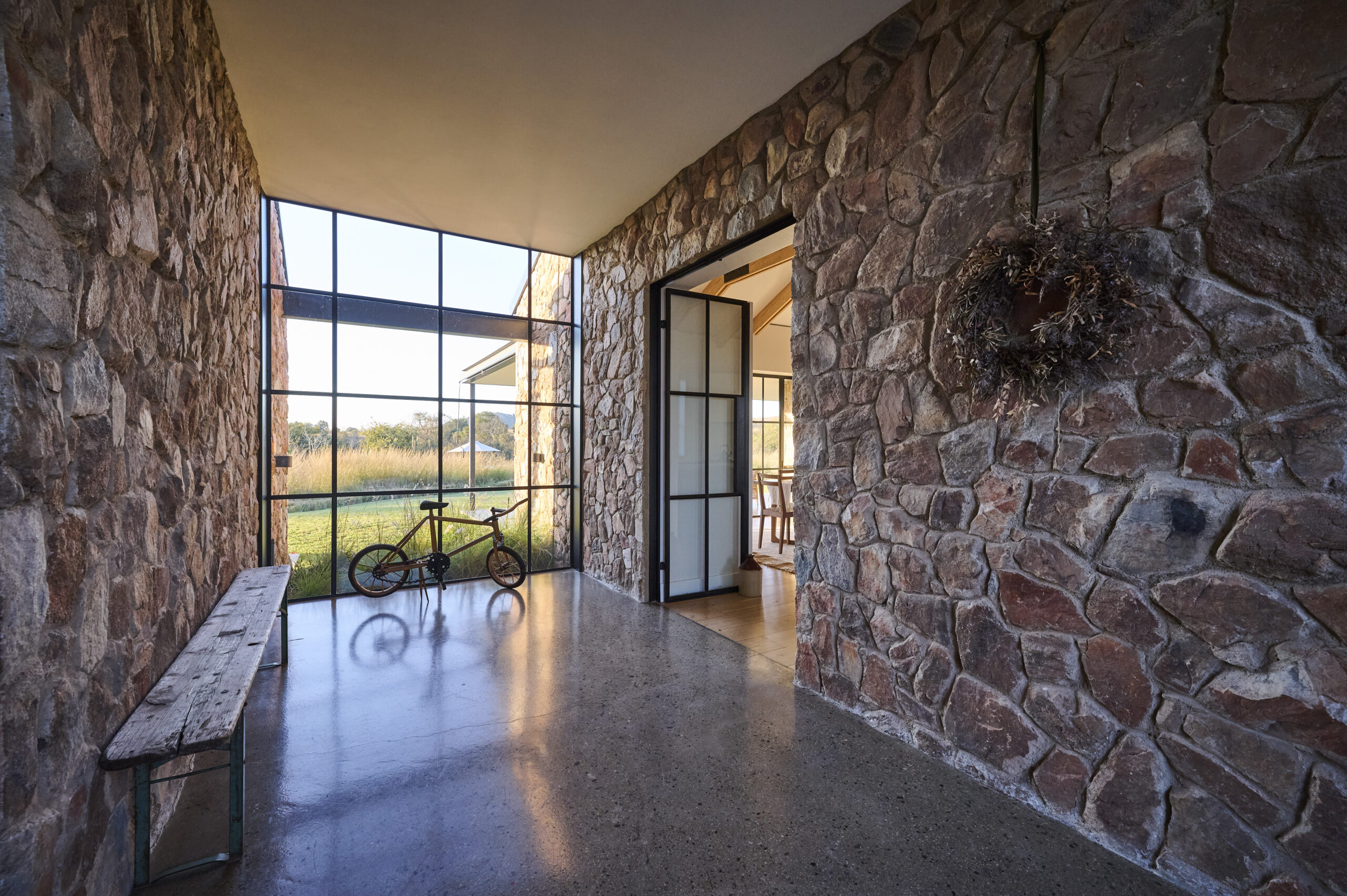
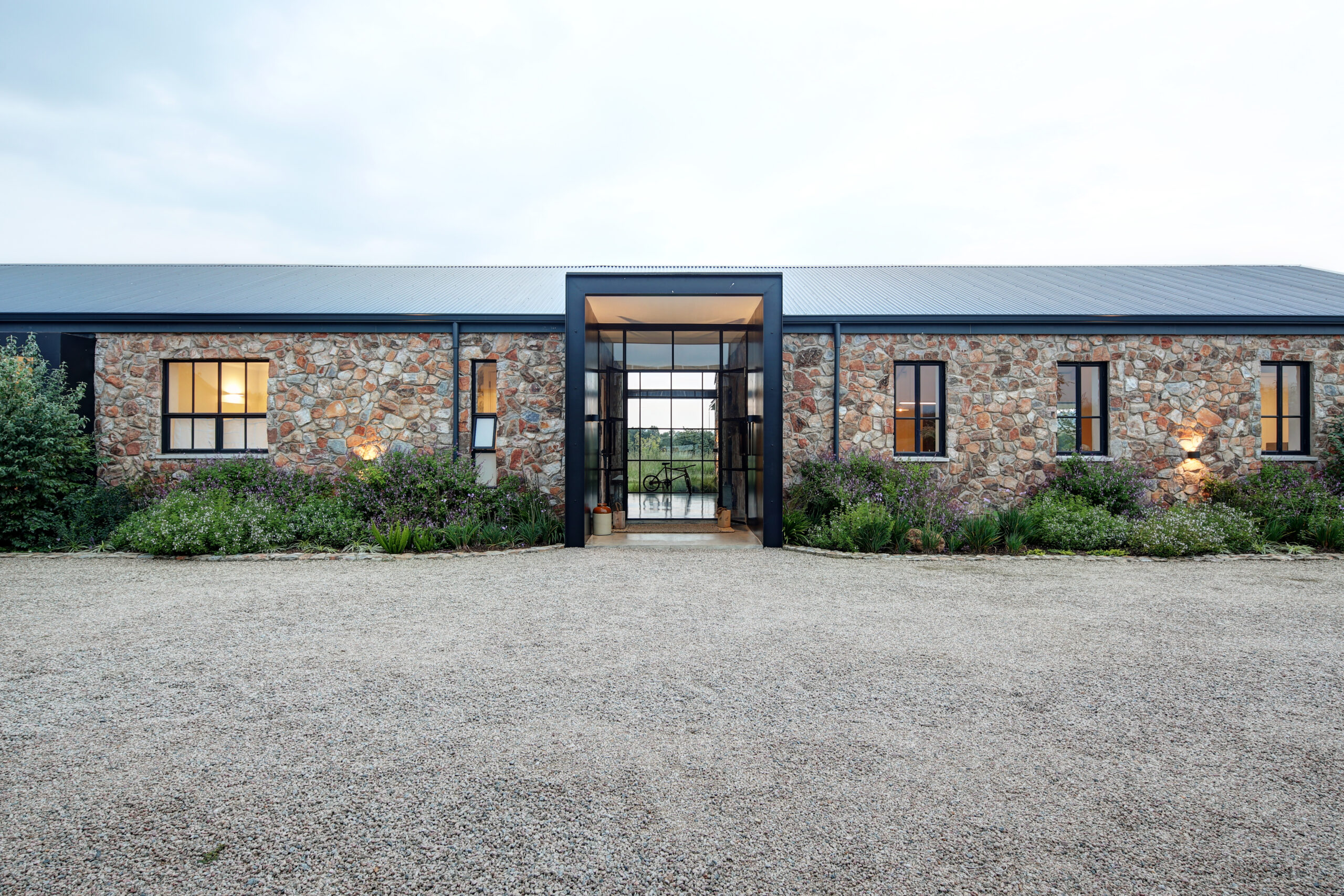
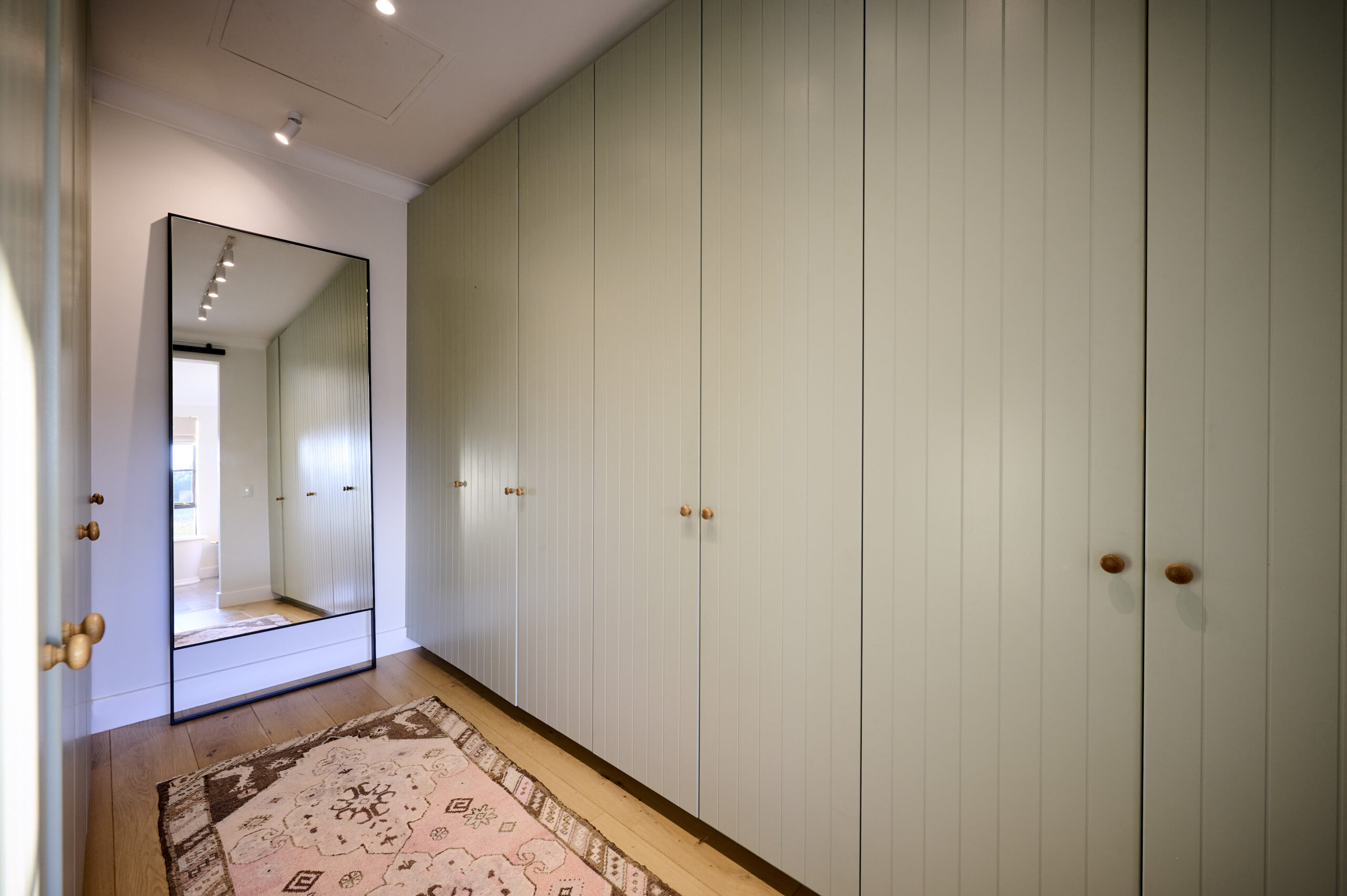
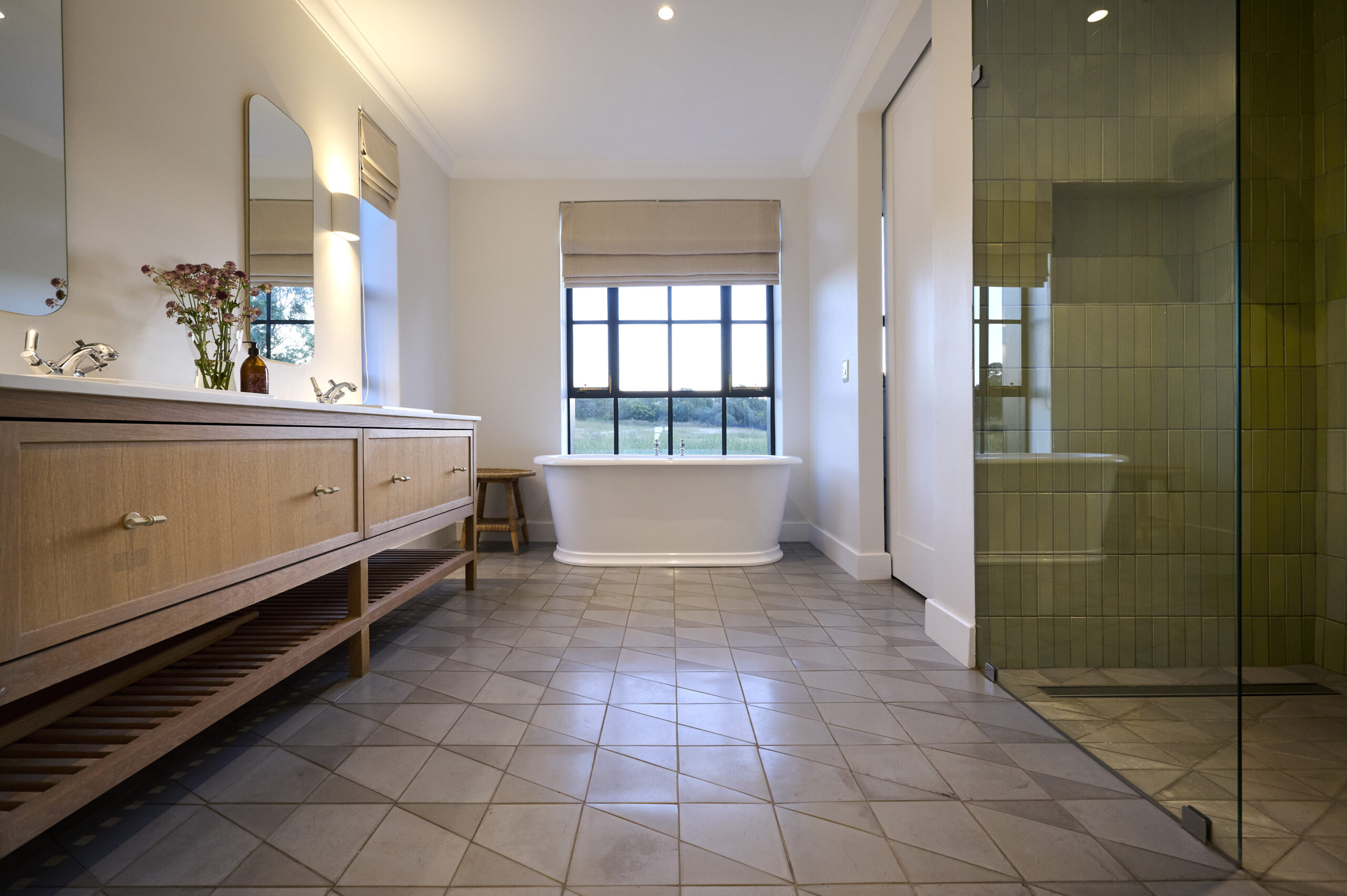
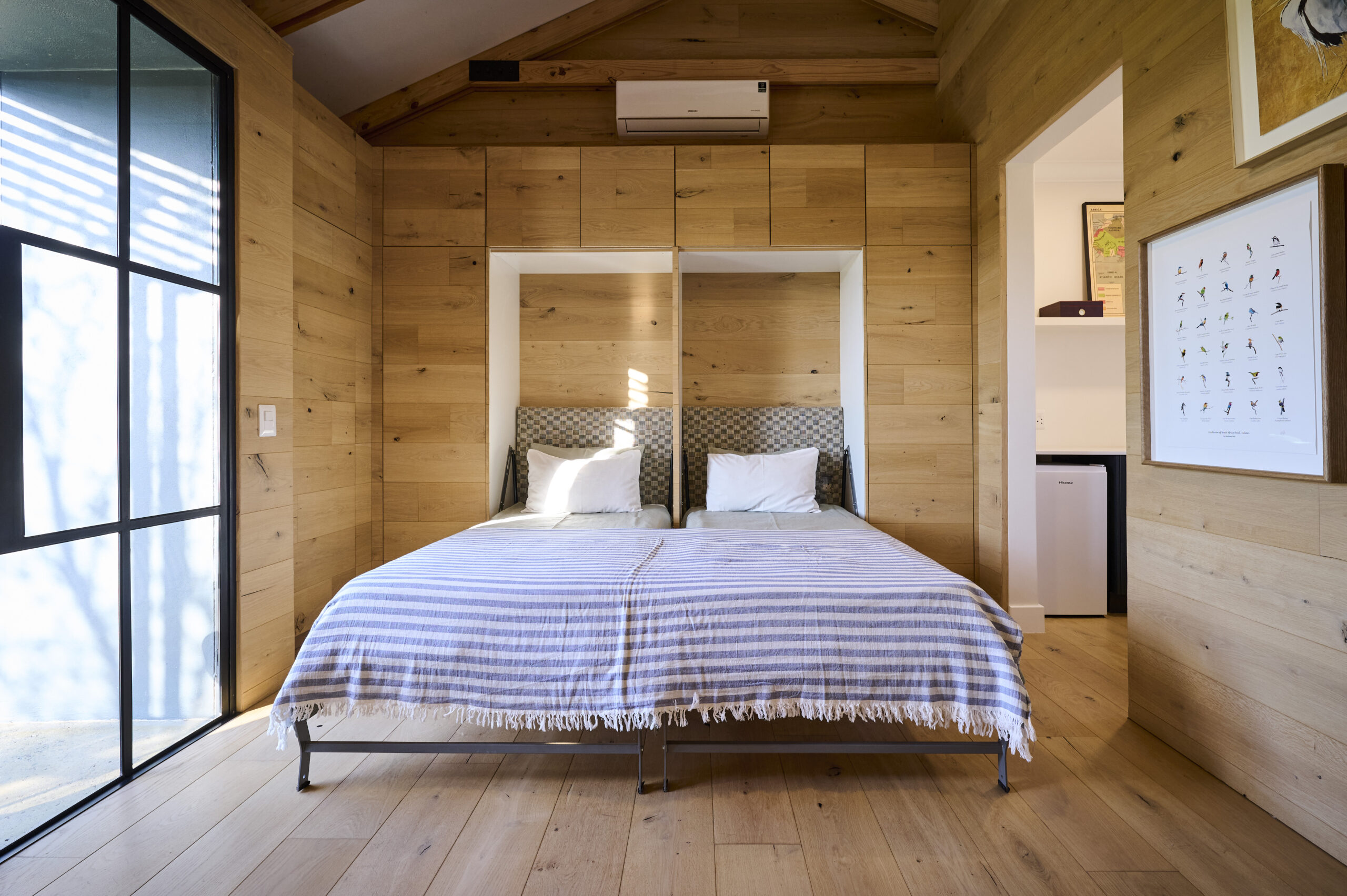
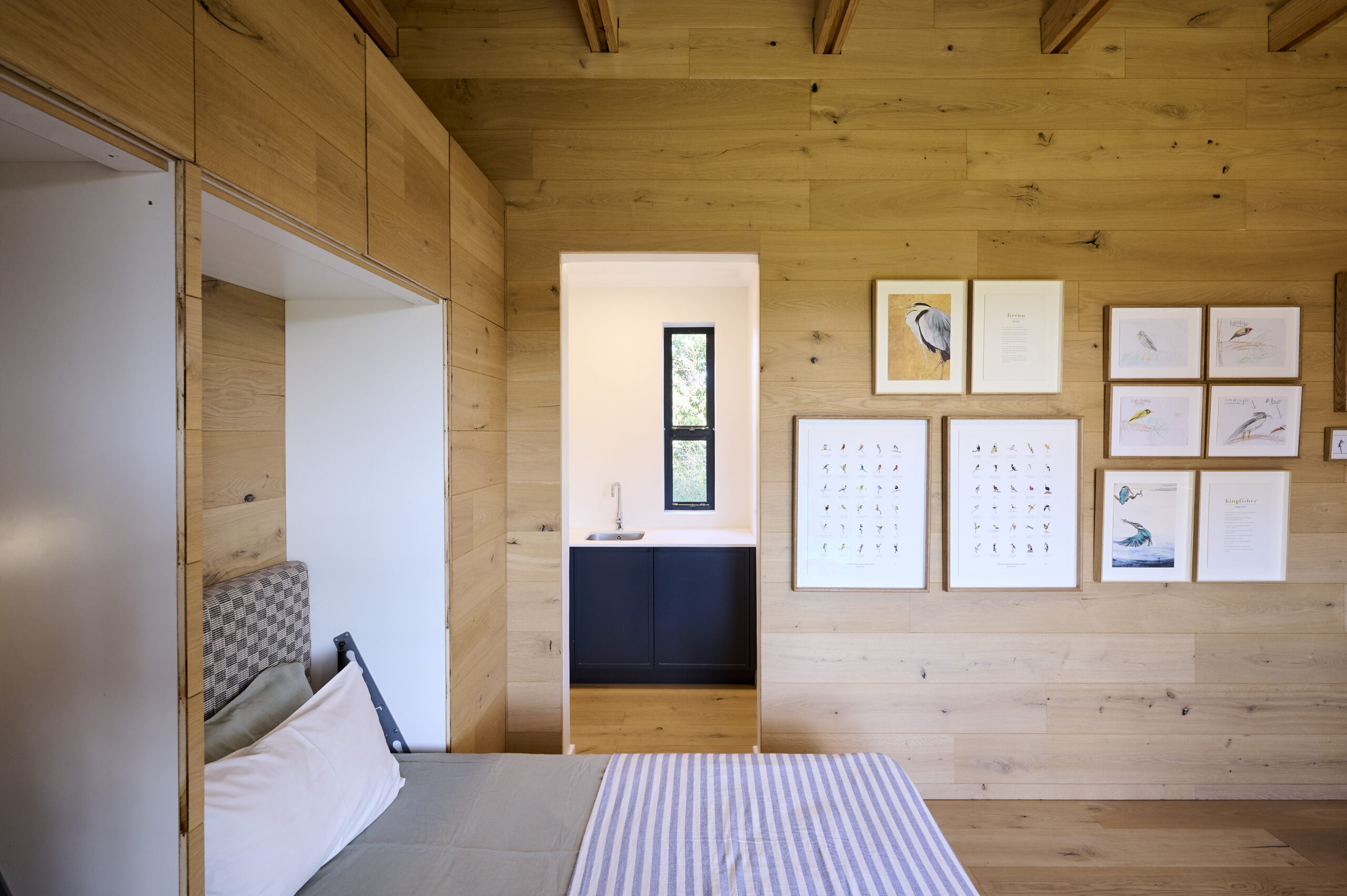
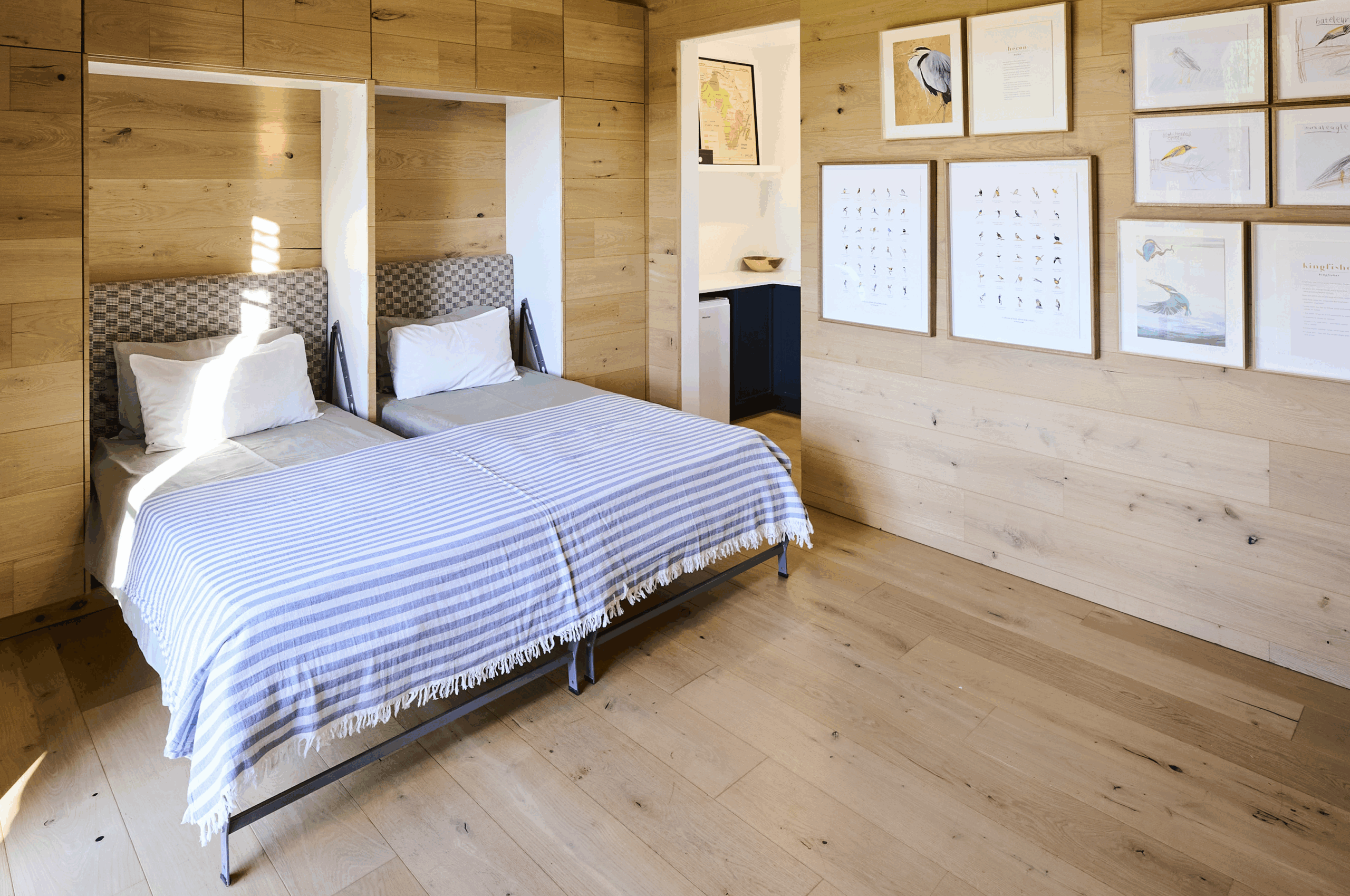
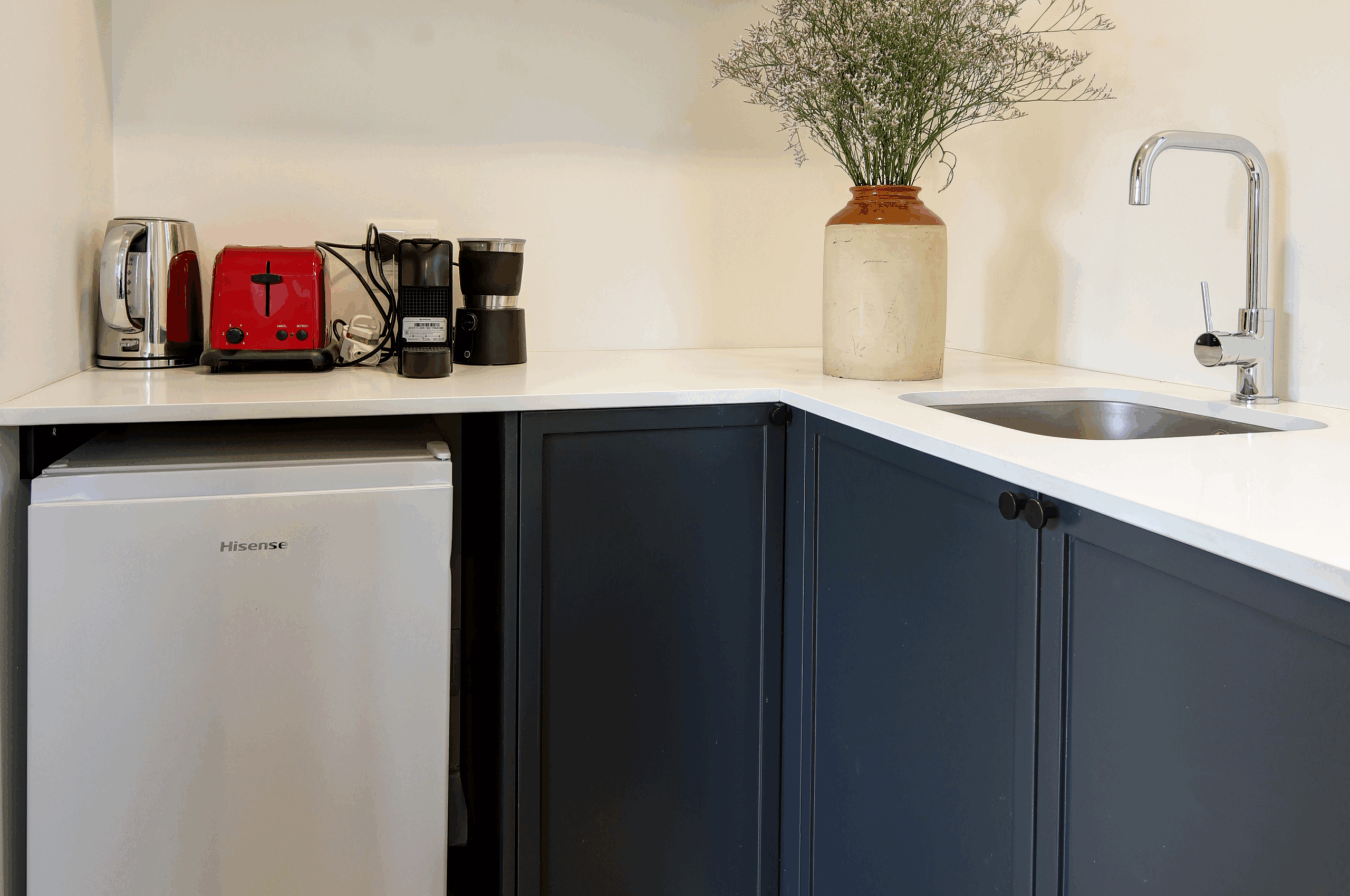
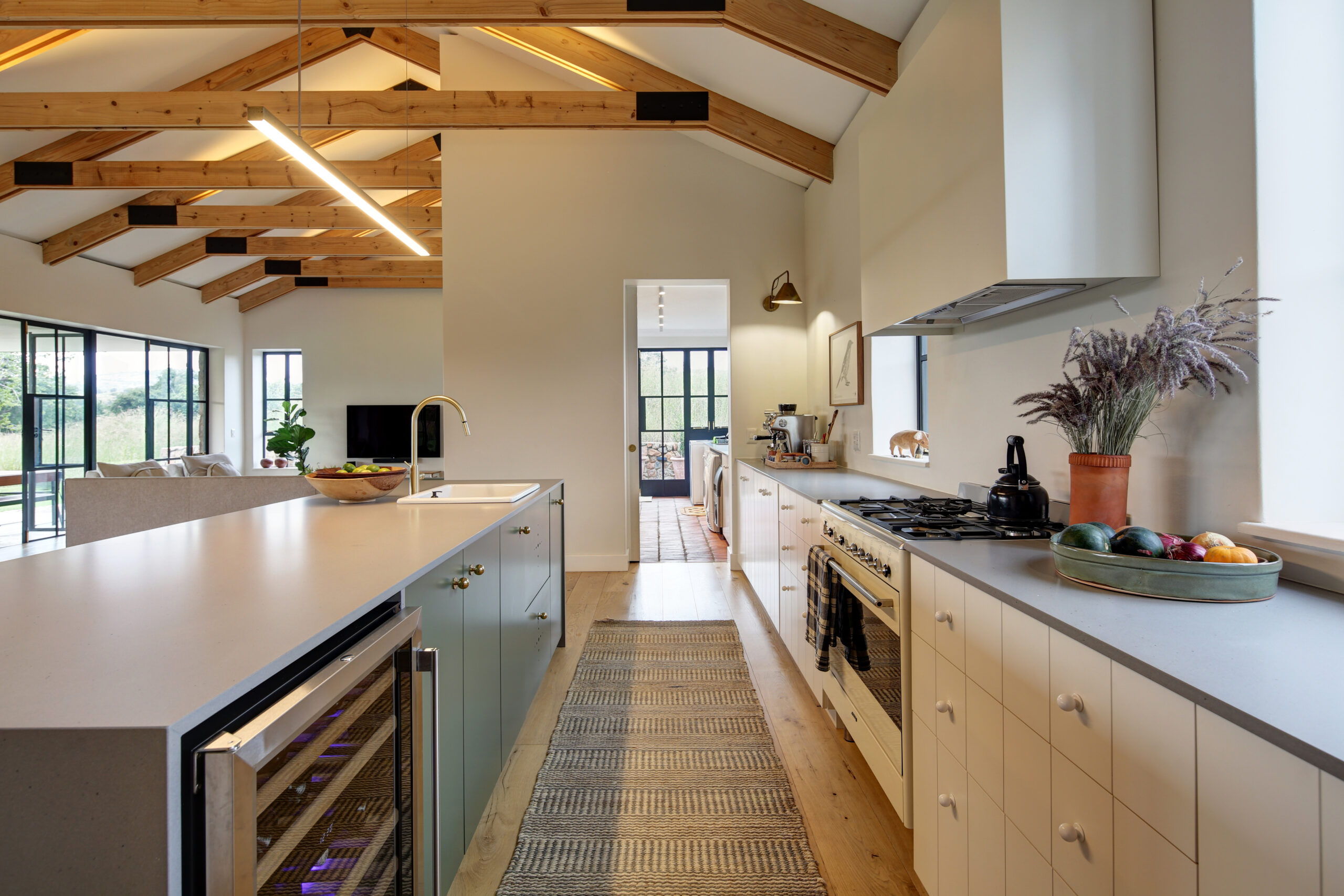
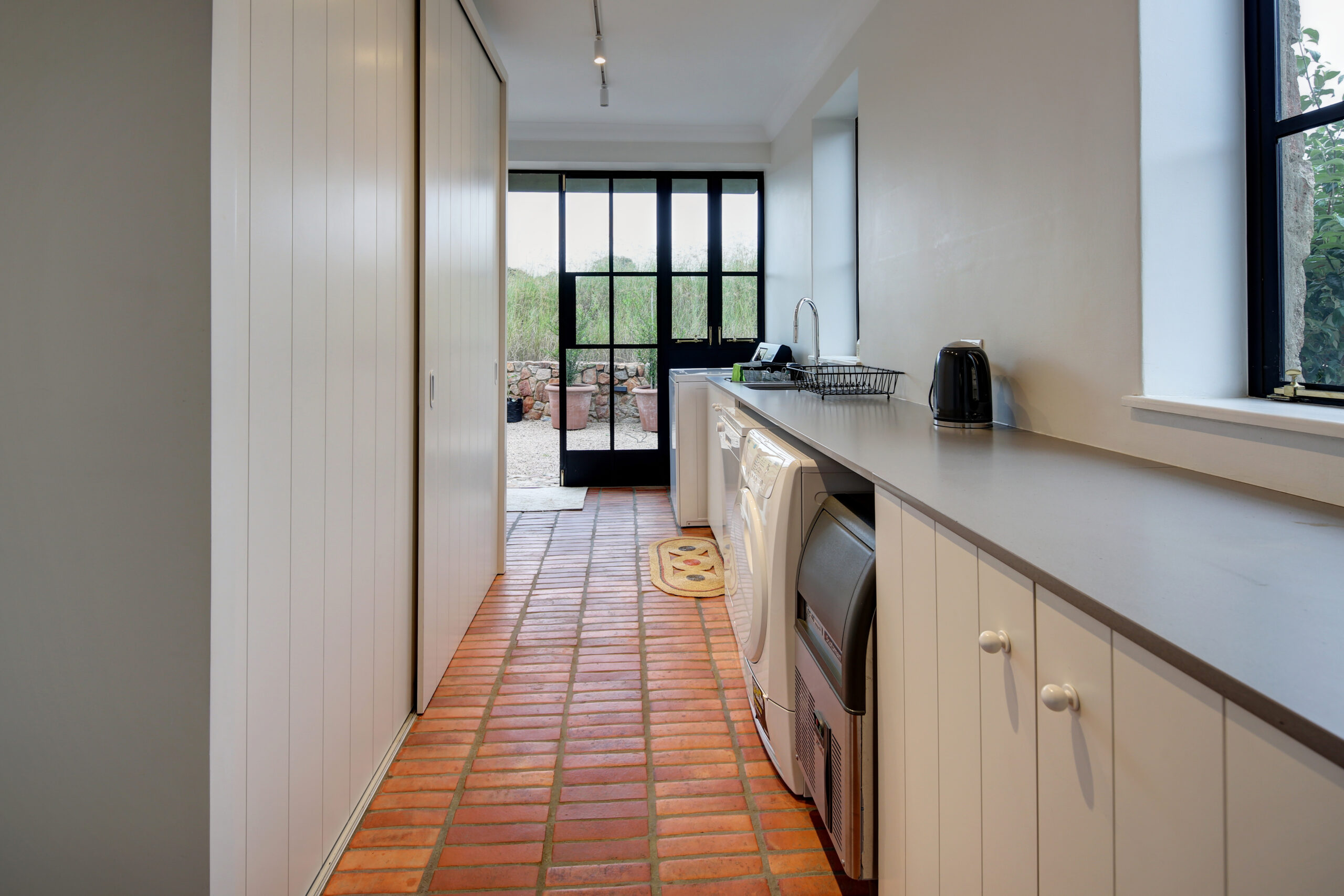
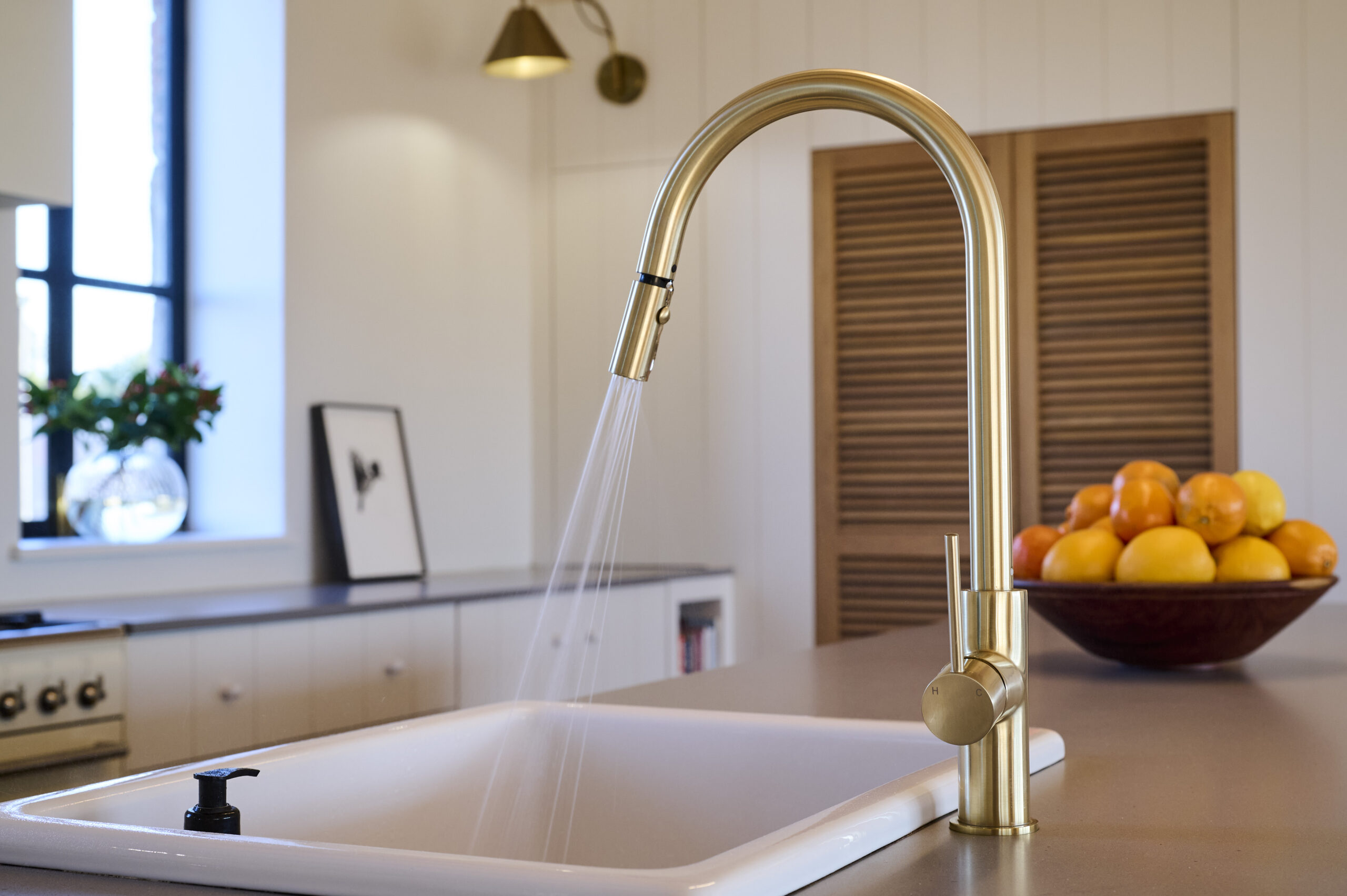
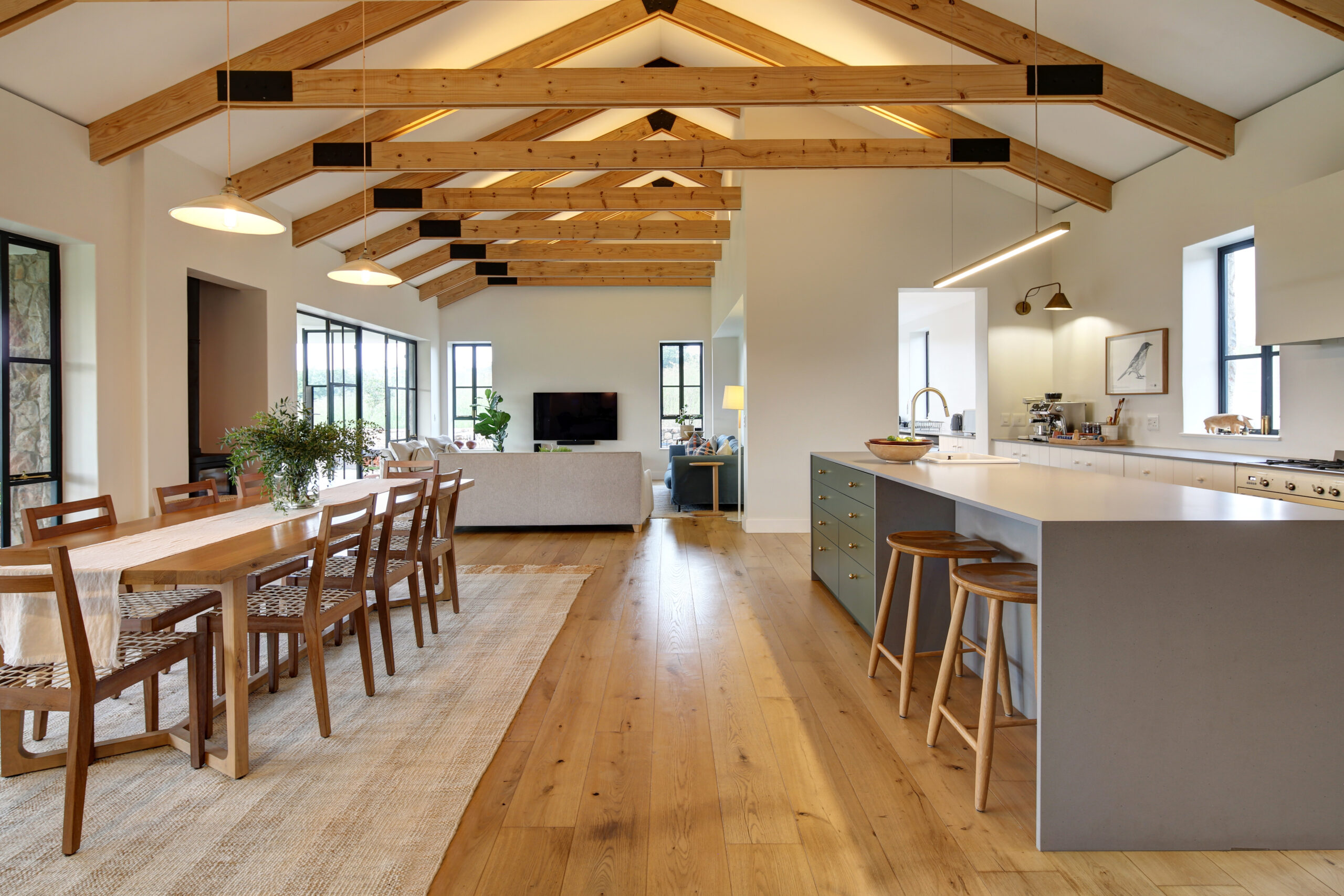
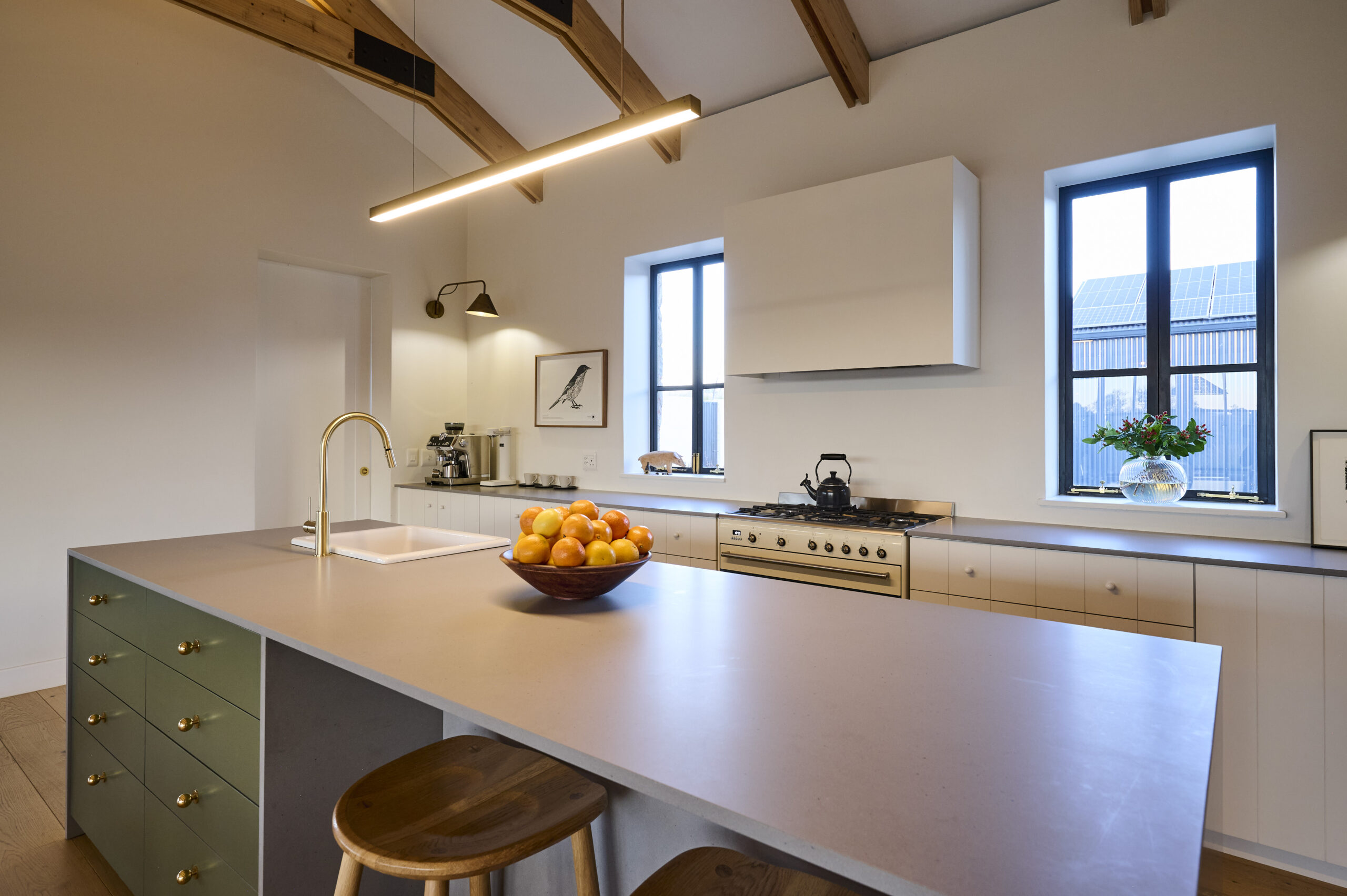
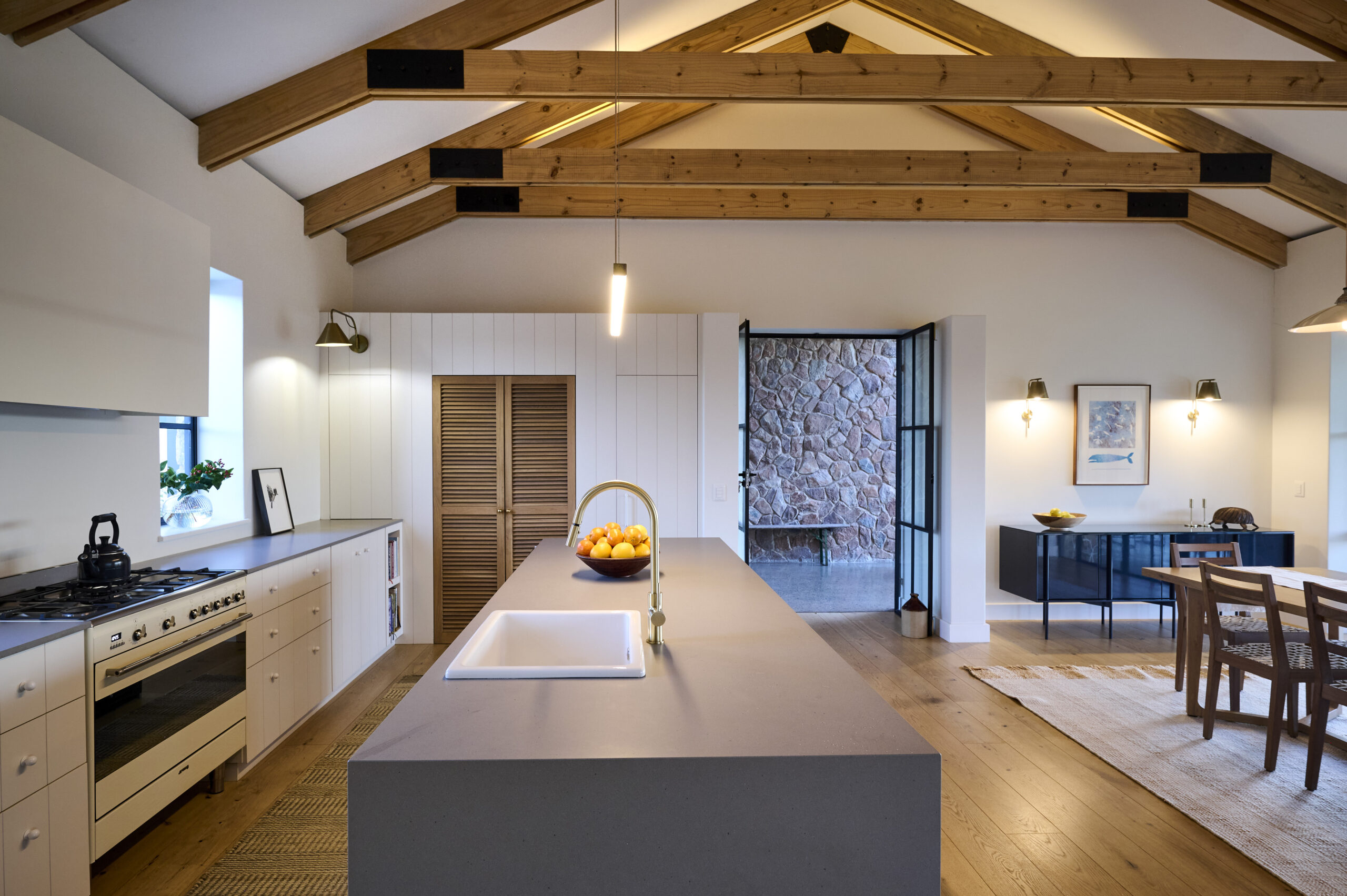
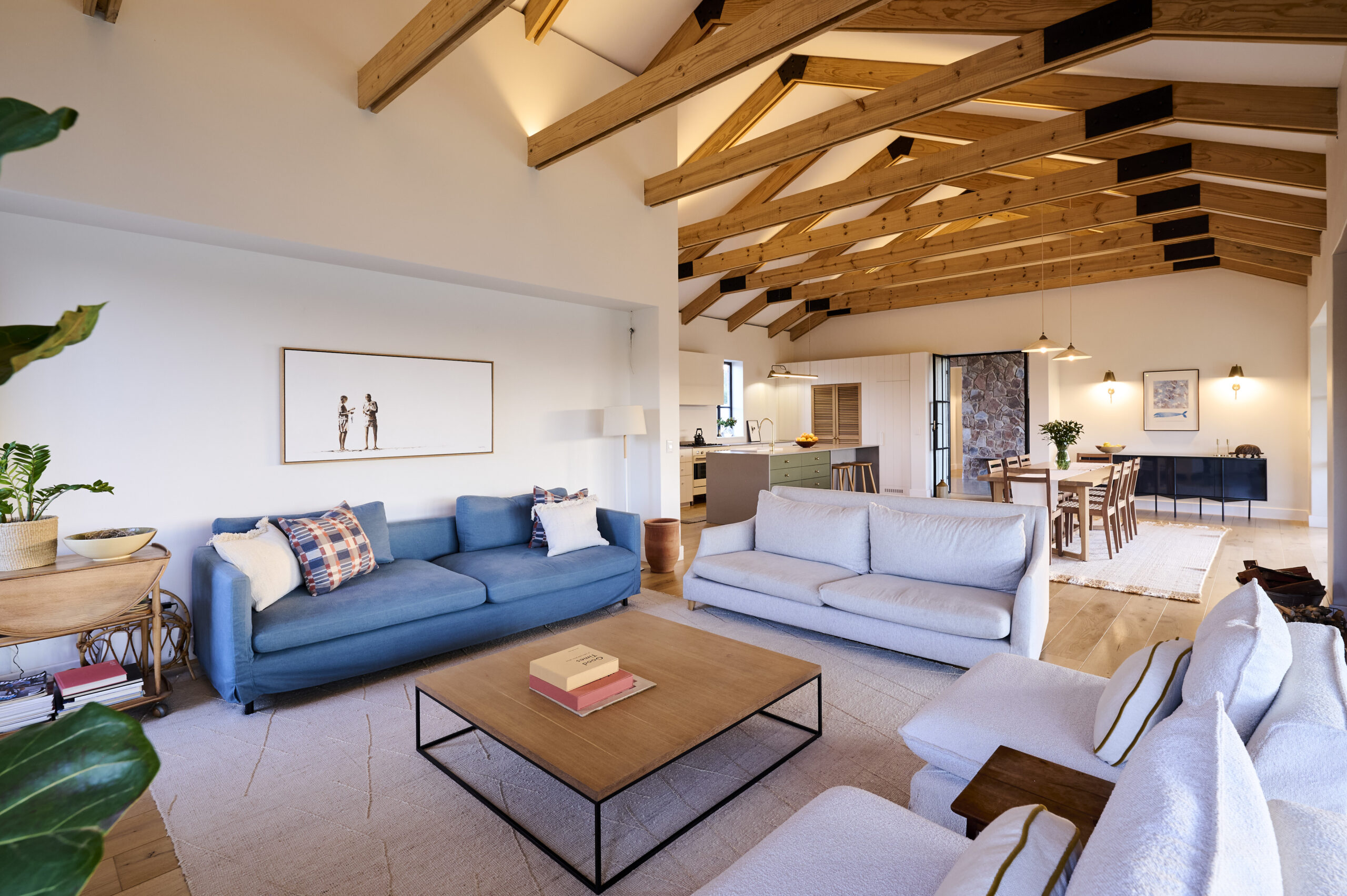
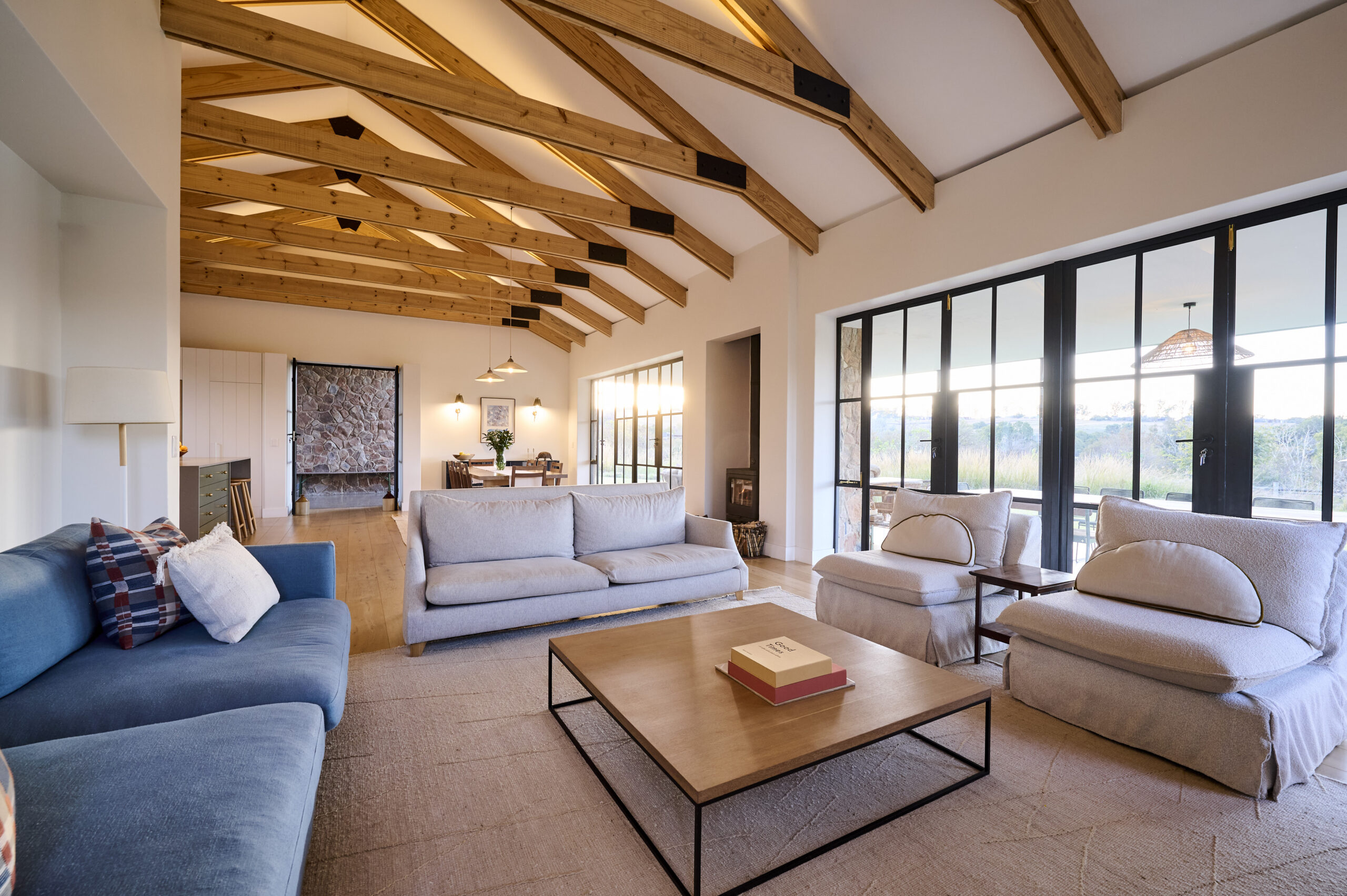
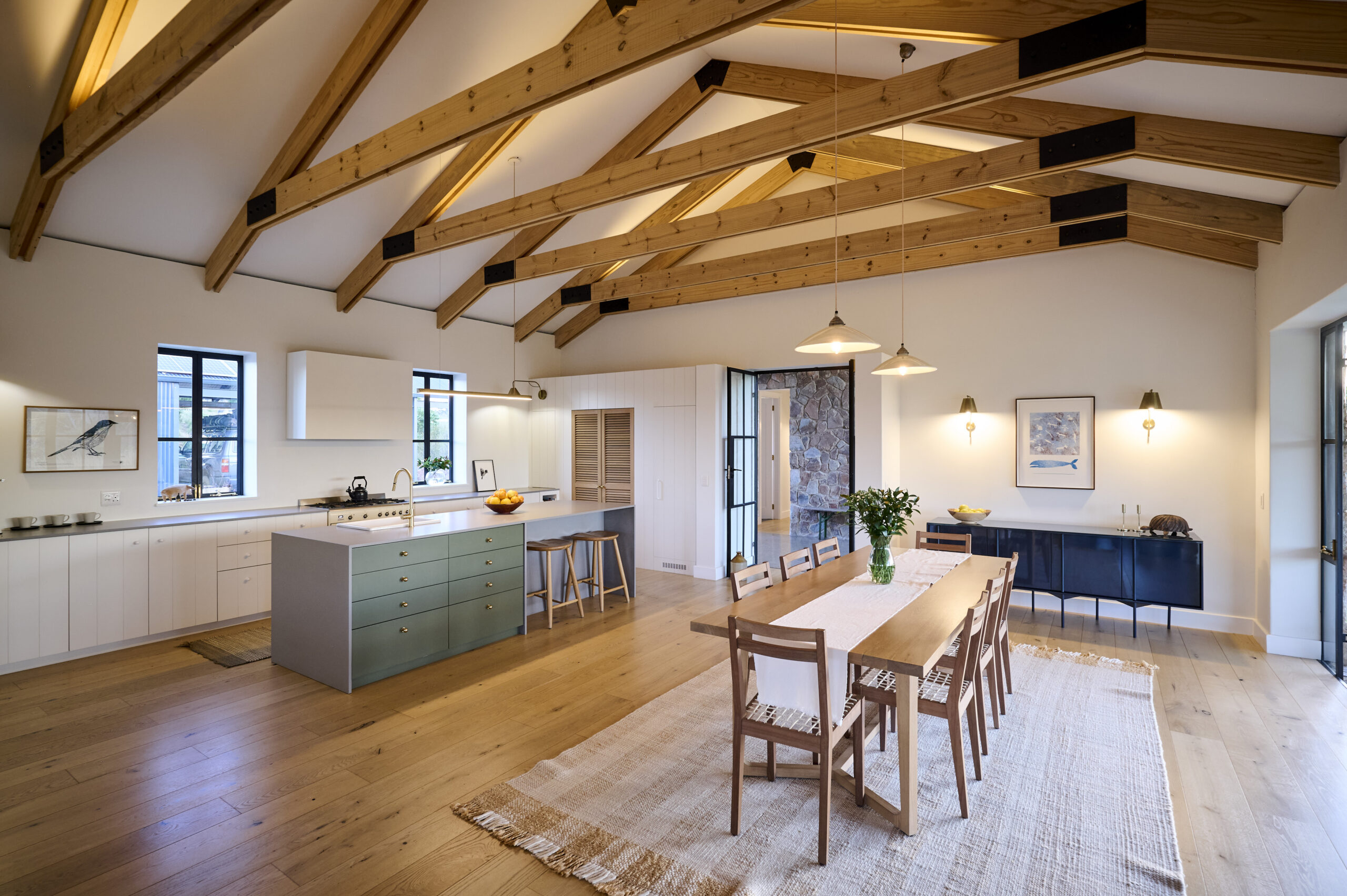
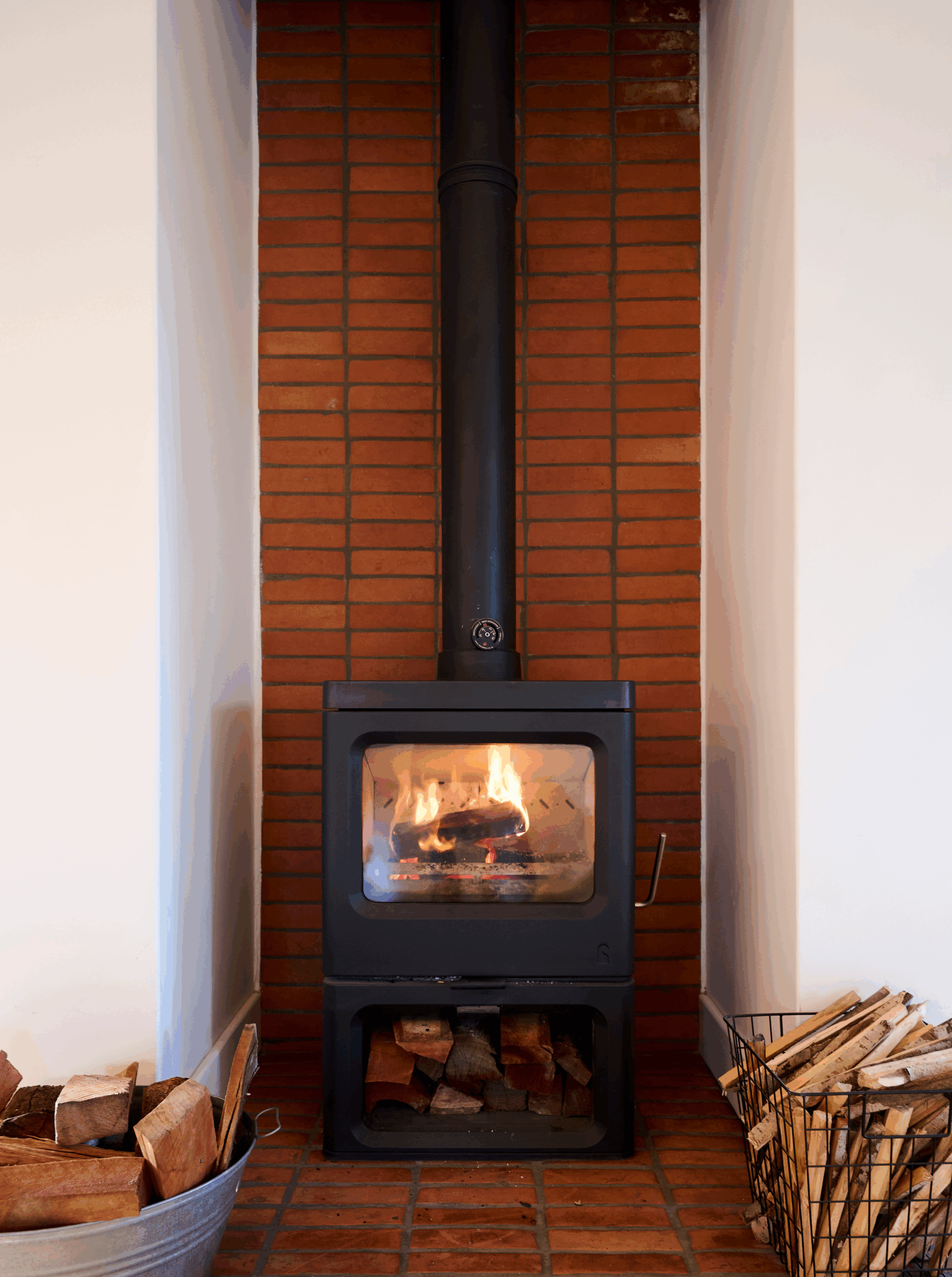
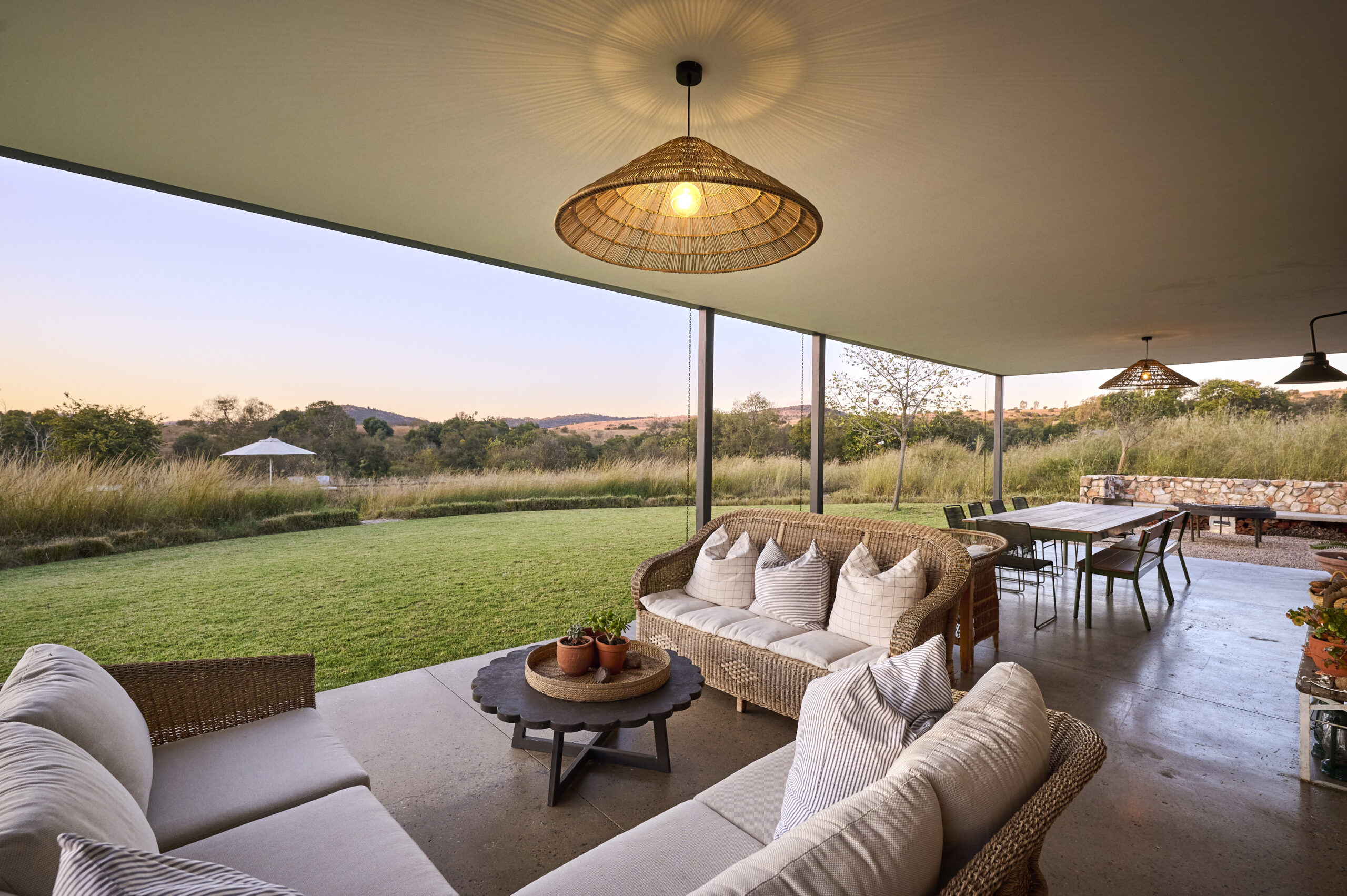
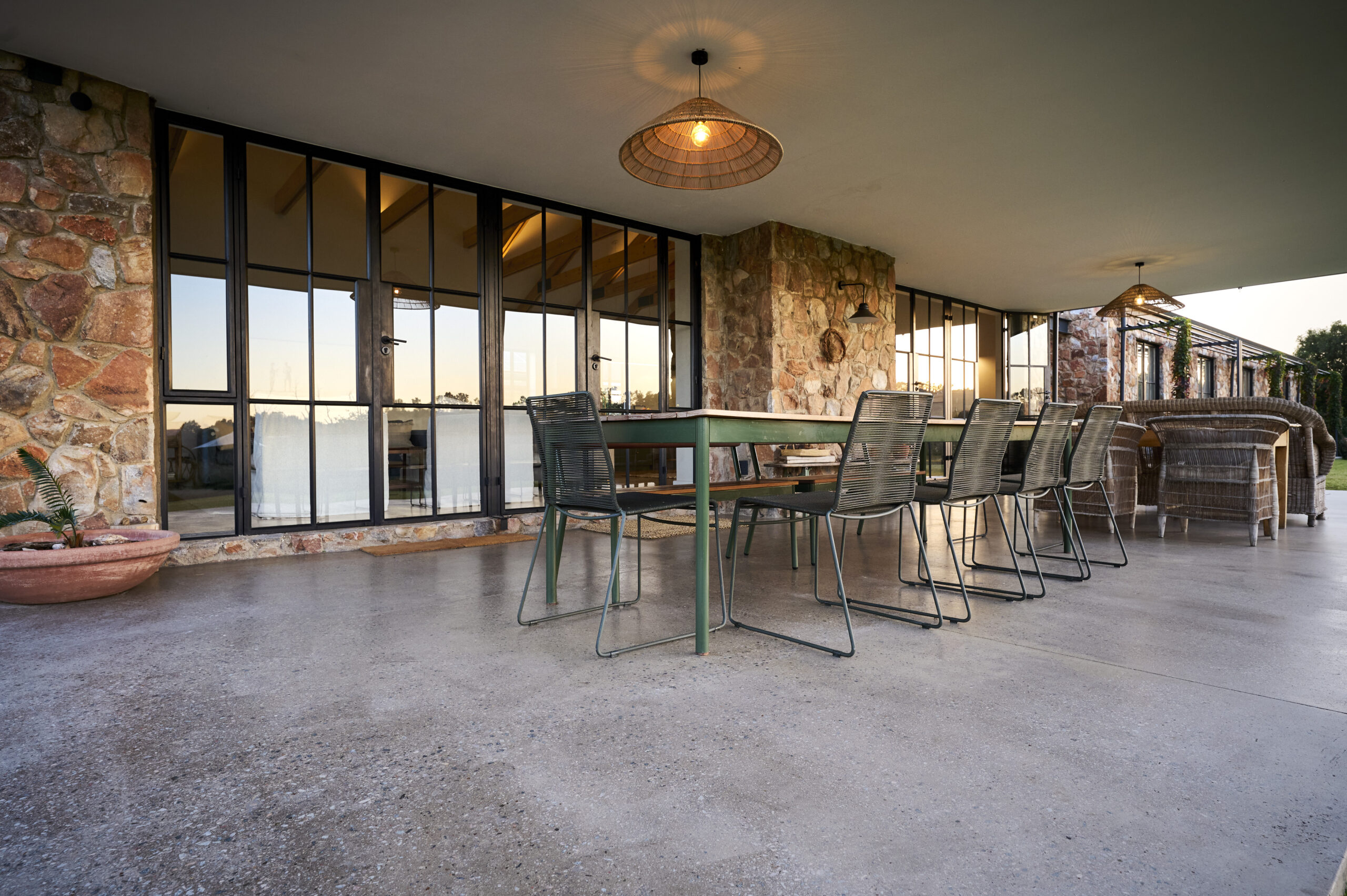
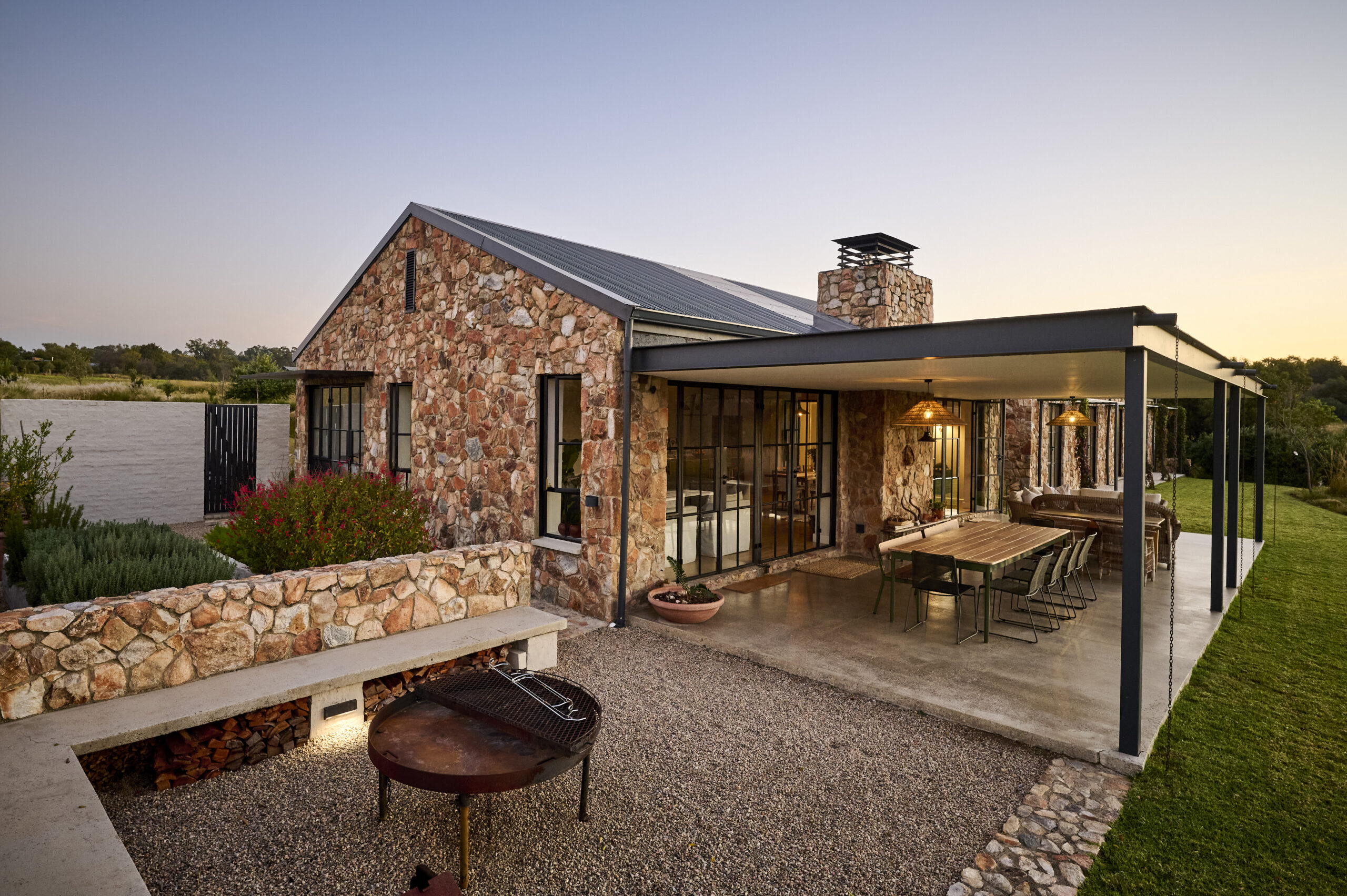
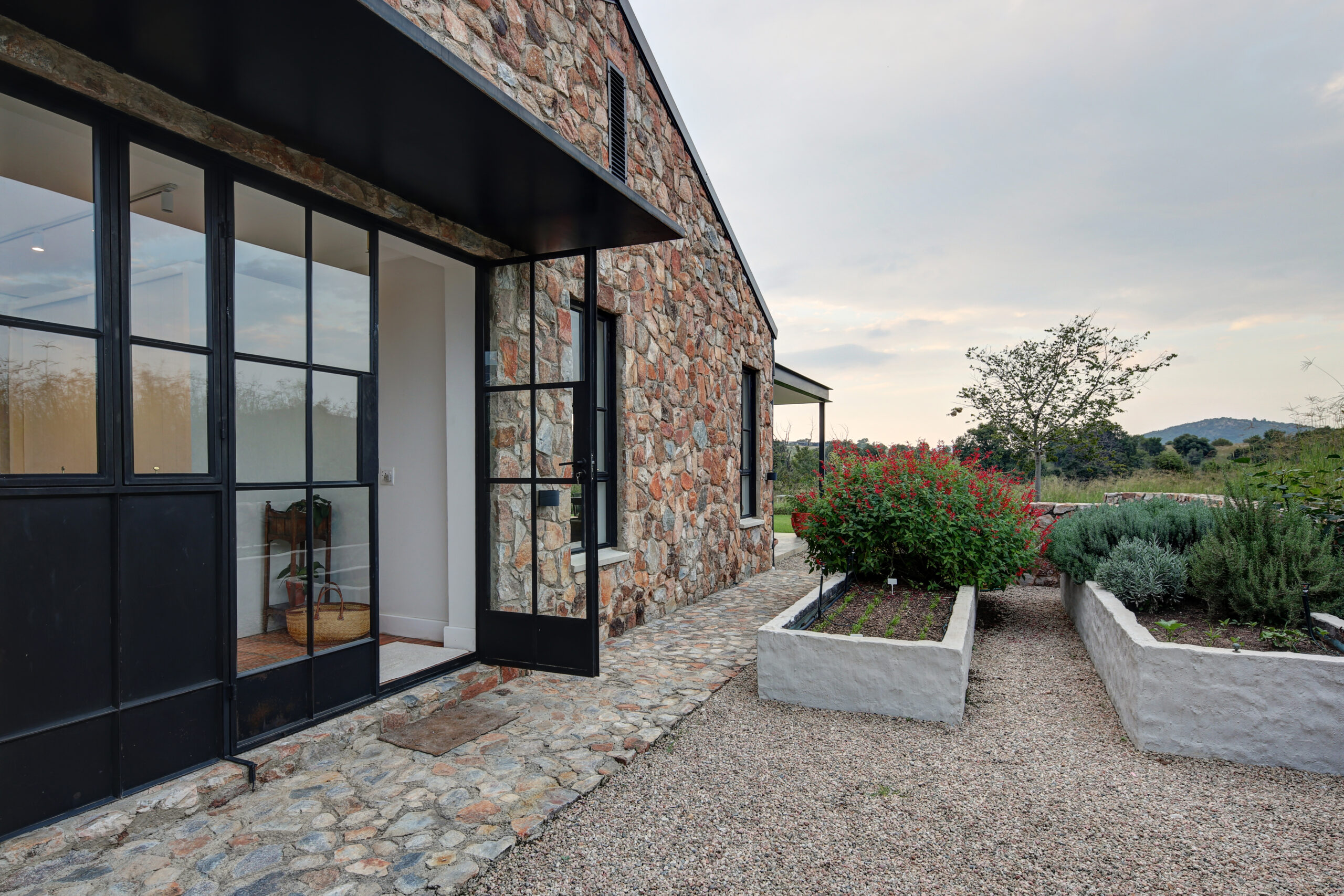
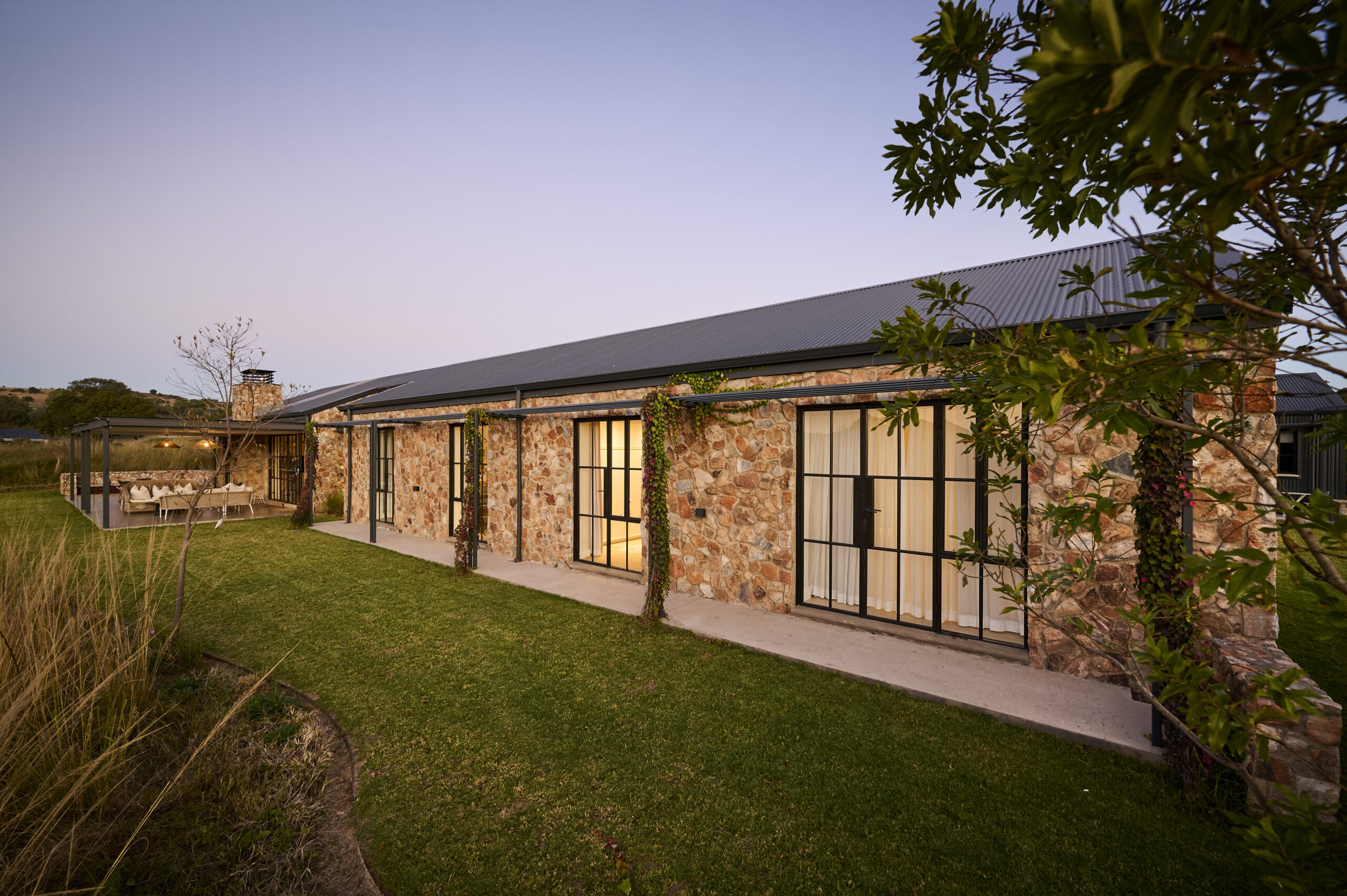
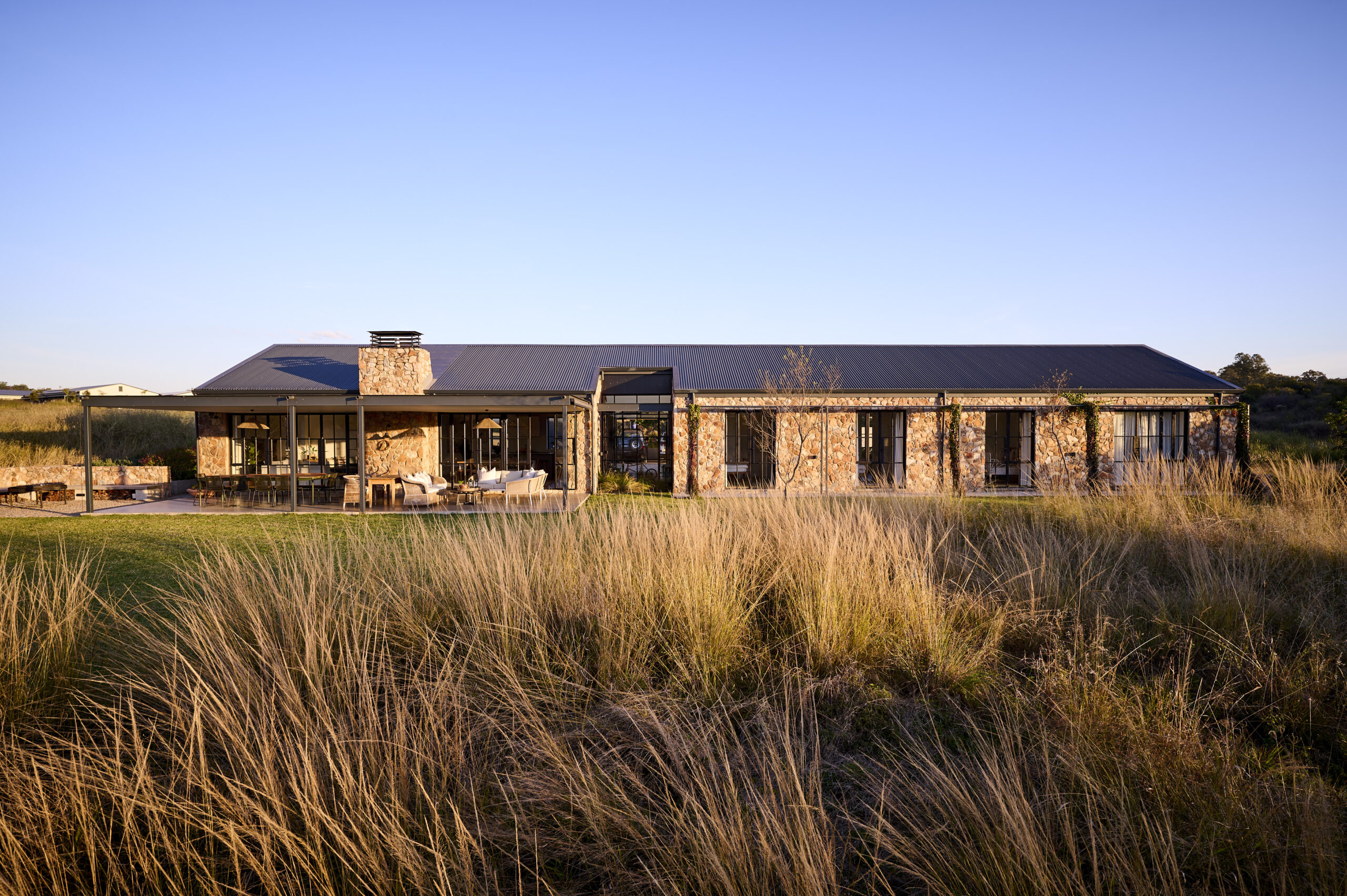
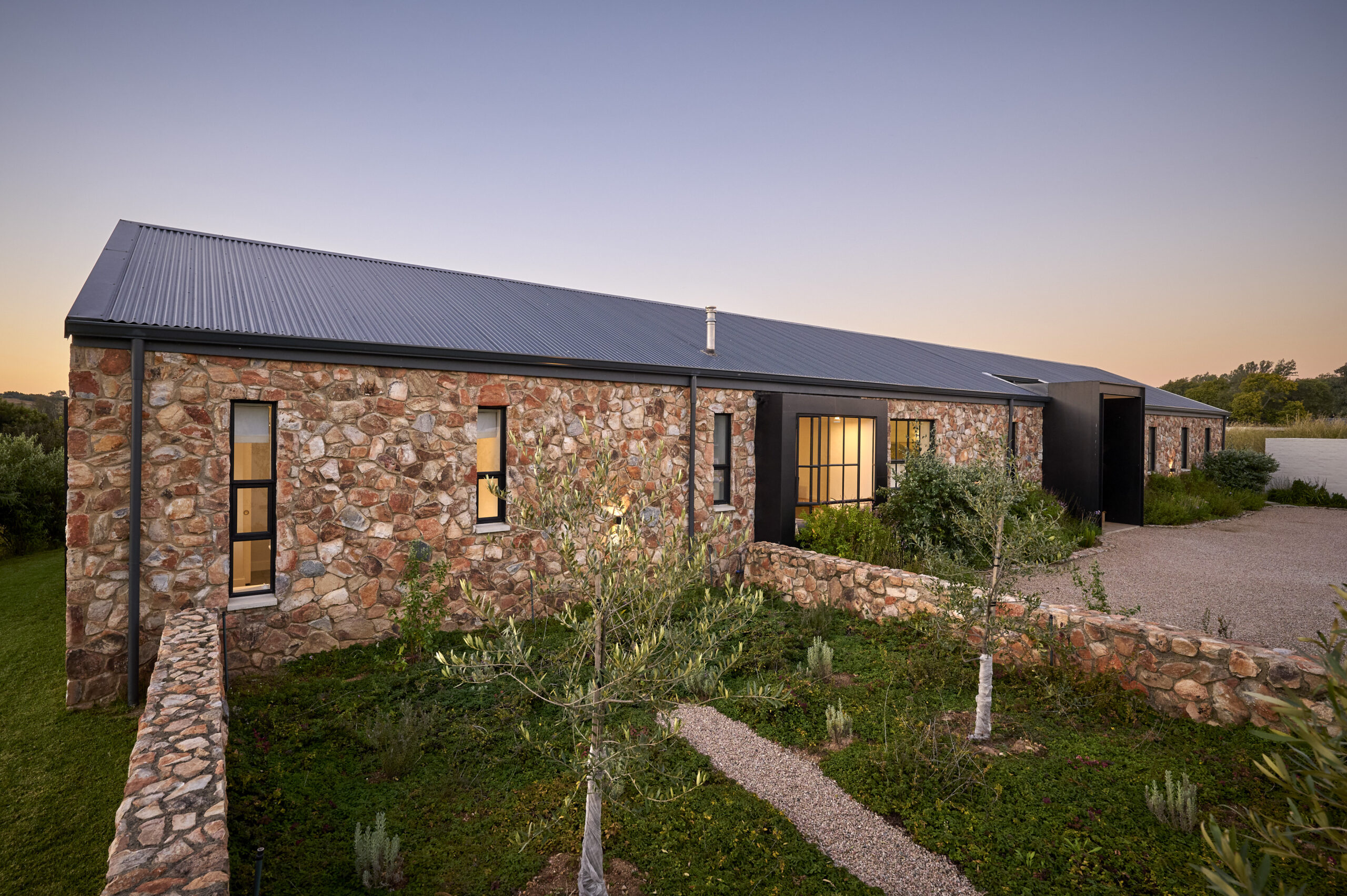
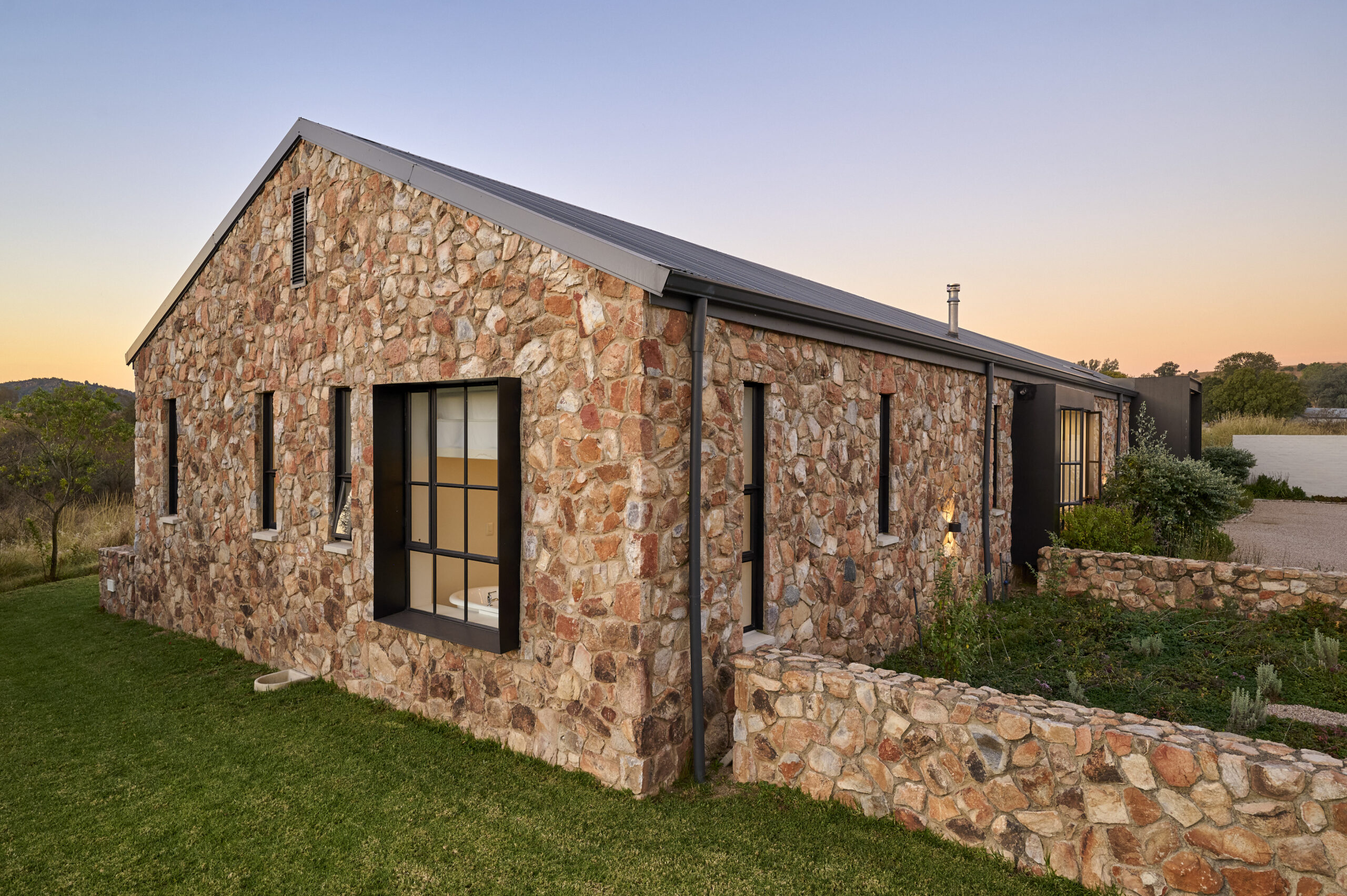

Located on a north-facing riverfront stand, gently sloping down towards the water’s edge, The Stone House occupies a position where architecture and environment are in deliberate dialogue.
The choice of site orientation was more than a functional decision; it was a key driver in shaping the home’s spatial arrangement, environmental comfort, and relationship to its surroundings. Facing north allows for maximum winter sunlight penetration into living spaces, while the slope naturally leads the eye and the architecture down towards the river.
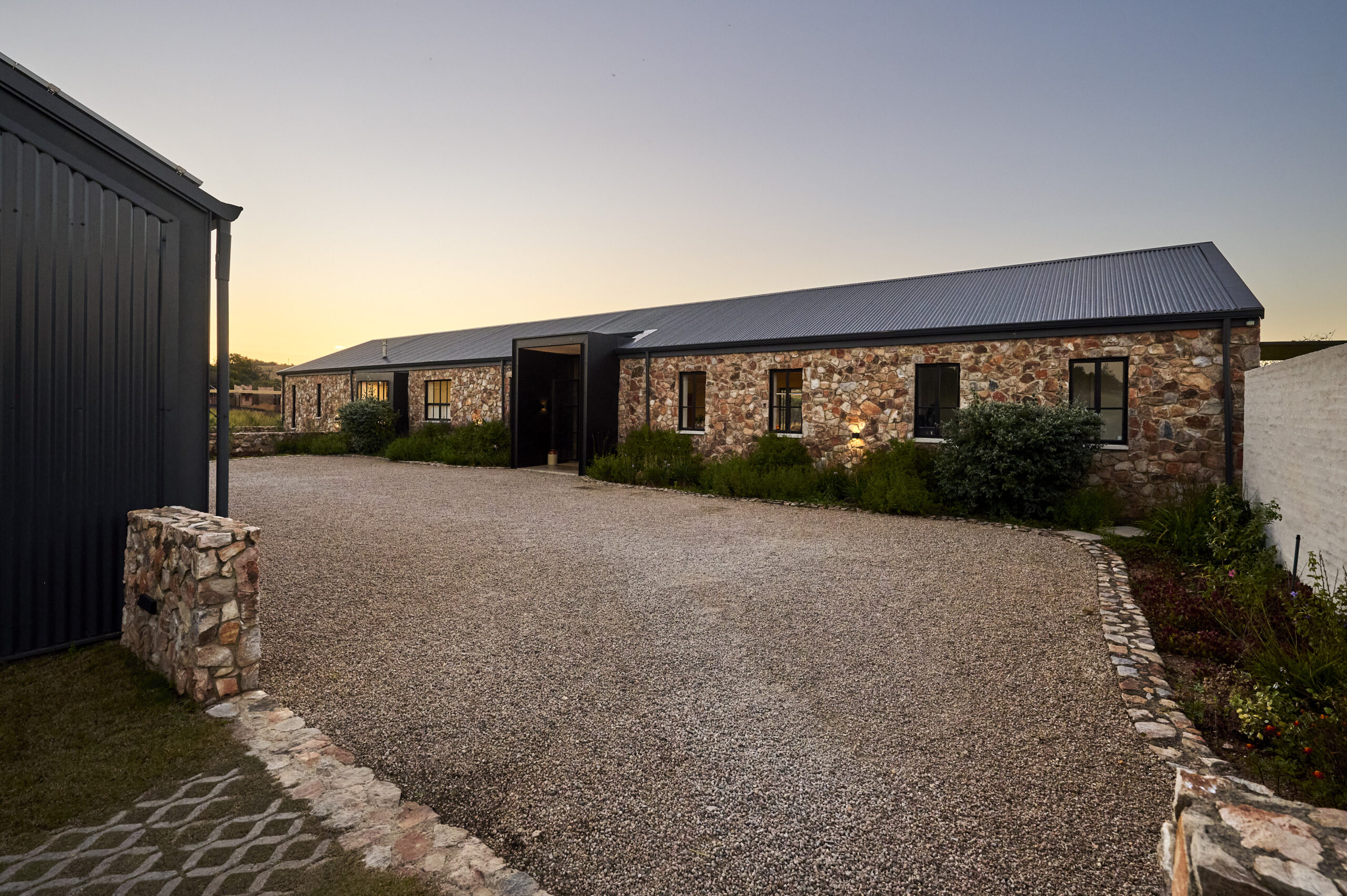
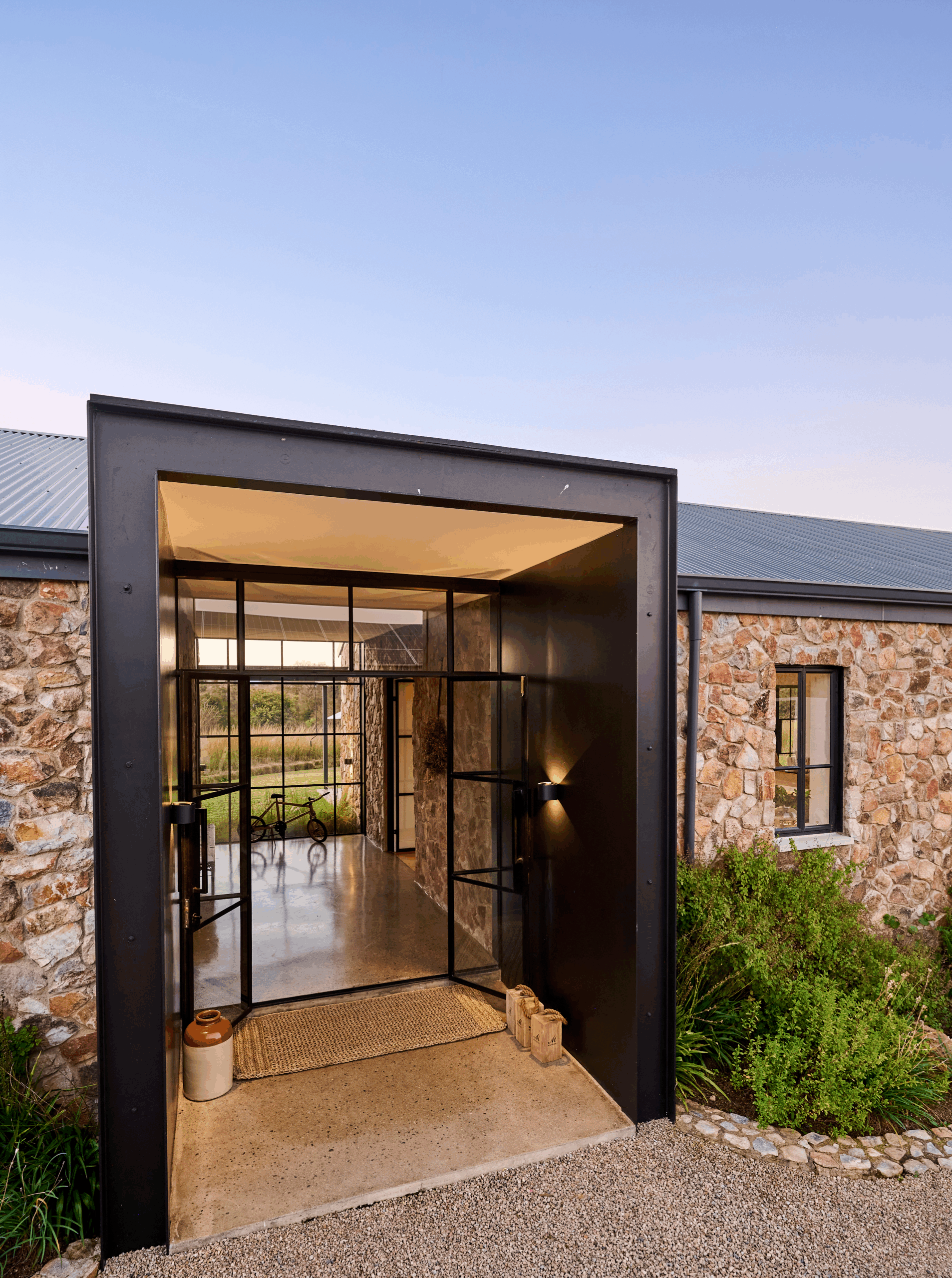
From the water’s edge, the composition of the house becomes immediately apparent: a monolithic stone-clad barn structure forms the primary mass, intersected by a lighter, steel-framed entrance volume. This interplay between “heavy” and “light” is a recurring theme throughout the design, and it is one of the ways the home bridges its traditional inspiration with a contemporary approach.
Inspiration from the Karoo Stone House Typology
The architectural concept takes cues from the traditional stone houses found in the Karoo, buildings known for their thick, thermal mass walls, simple rectangular forms, and robust presence in often rugged landscapes.
However, the design intent here was not to merge traditional and modern elements into a hybrid. Instead, the decision was made to juxtapose them. The “heavy” is represented by the stonework cladding, while the “light” is expressed through steel structural elements and minimalist detailing.
The result is a composition that feels both timeless and modern. The stone recalls centuries-old craftsmanship, while the steel speaks of contemporary construction precision and architectural restraint.
The Client’s Vision: A Personal Connection to Stone
For the owners, this was more than just a design choice; it was a deeply personal architectural journey. The home’s name, The Stone House, reflects both its physical character and its emotional resonance and was significantly influenced by the family’s time spent living in an old granite farmhouse in Jersey, Channel Islands.
The owner, a geologist, placed particular importance on the geological authenticity of the materials. The stone was not selected simply for its colour or texture. Instead, it was sourced from the same geological formation as the land on which the house stands. This commitment to context meant sourcing beautiful quartzite rocks from a nearby farm. In doing so, the building is not only visually tied to its surroundings but geologically “rooted” in them.
Design Response: Intersecting Masses and Defined Zones
The house is composed as a series of intersecting volumes, with the main barn-like stone form housing the primary living functions. This is physically and visually divided by a steel-framed entrance hall that separates the bedroom wing from the living wing.
The floor plan follows a linear logic:
- Living and bedroom spaces are all oriented to the north and east, capitalising on sunlight and the views.
- Service spaces such as the scullery, laundry, and storage are positioned to the south and west, acting as a thermal buffer.
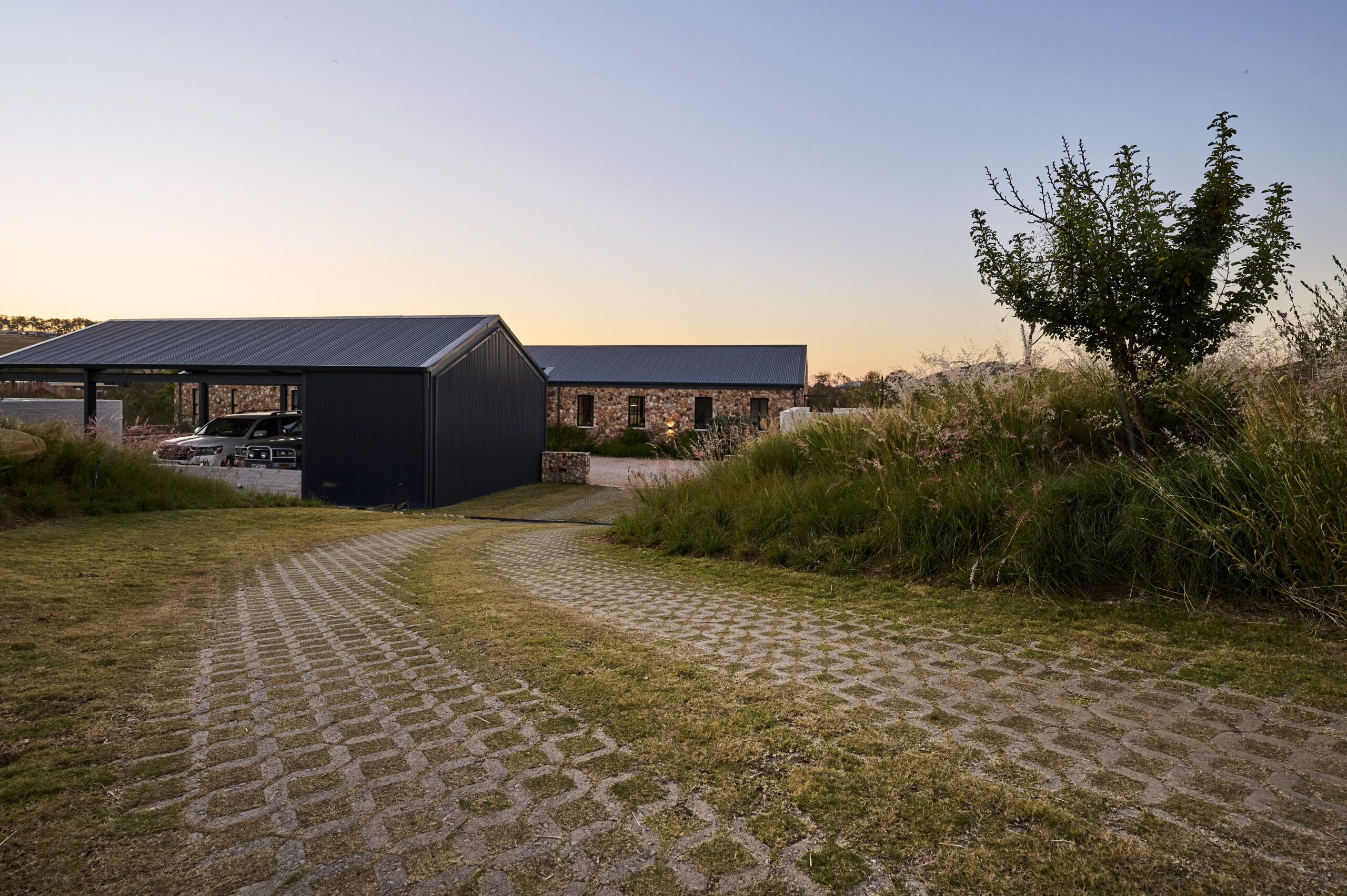
From the approach, the main dwelling is shielded from the road by carport and storage block clad with steel roof sheeting. This not only provides privacy but reinforces the architectural language of heavy and light, and traditional agricultural buildings.
Stone House Courtyards: Softeners of Form
Given the visual weight of deep stone walls, the design incorporates planted courtyards to break up the massing. These landscaped pockets introduce greenery into the heart of the home, filtering light and air while visually softening the building’s solidity.
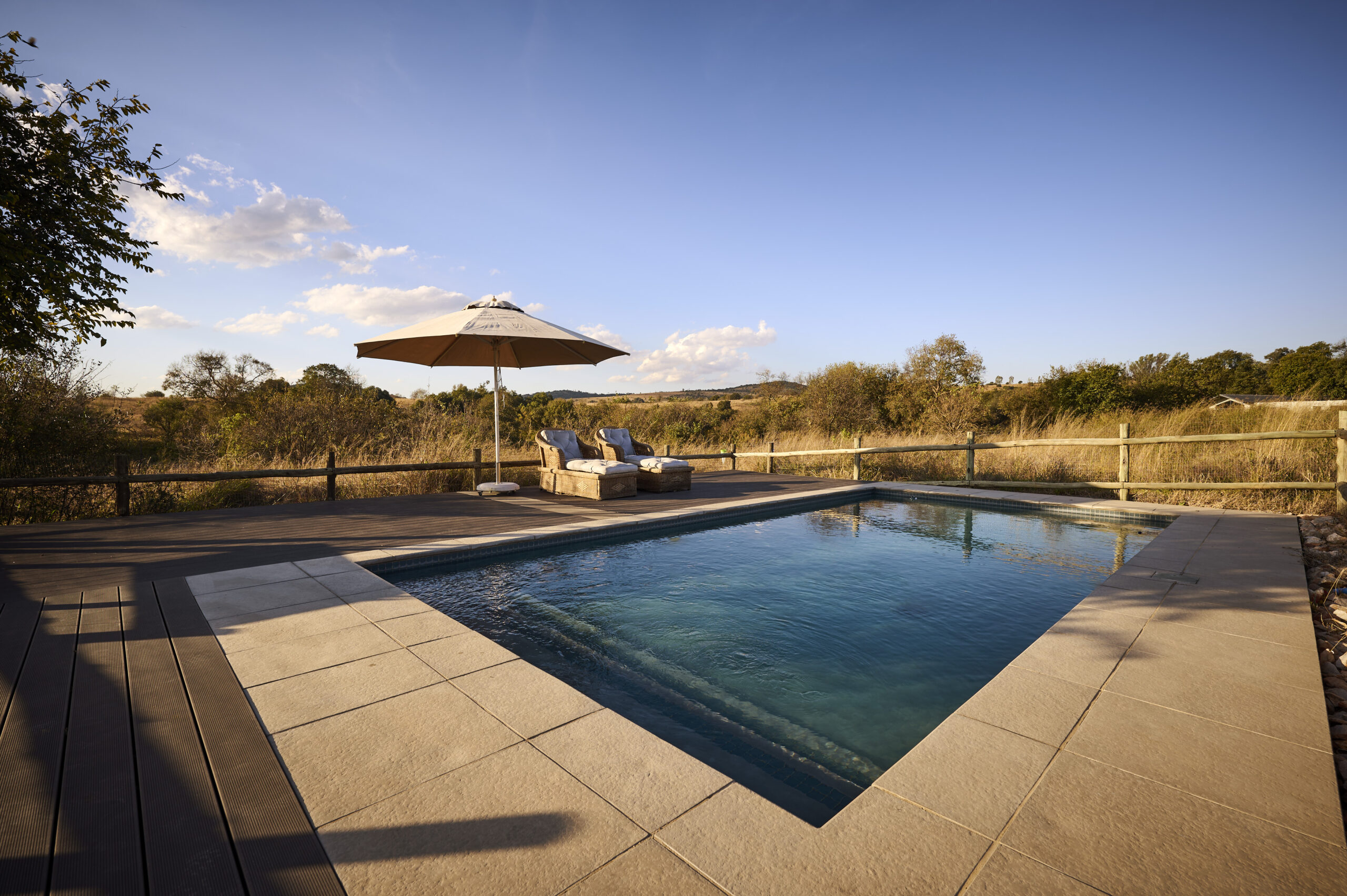
One courtyard links directly to the main living area, creating an immediate indoor-outdoor connection. Another is positioned near the bedroom wing, offering a private, contemplative outdoor space. The pool area, deliberately placed at a remove from the main house, provides a separate experience of place.
Lightness in Detail: Pergolas and Window Liners
While the stonework conveys permanence, the steel detailing lends agility and precision. Slim steel pergolas define outdoor living spaces without blocking light or air. Window liners in matching steel provide a sharp-edged contrast to the rough textures of quartzite.
The covered patio, an extension of the open-plan living area, merges seamlessly with the living space, allowing for relaxed gatherings while maintaining the architectural balance of solid and void, shadow and sunlight.
Interior Spaces: Framing the View
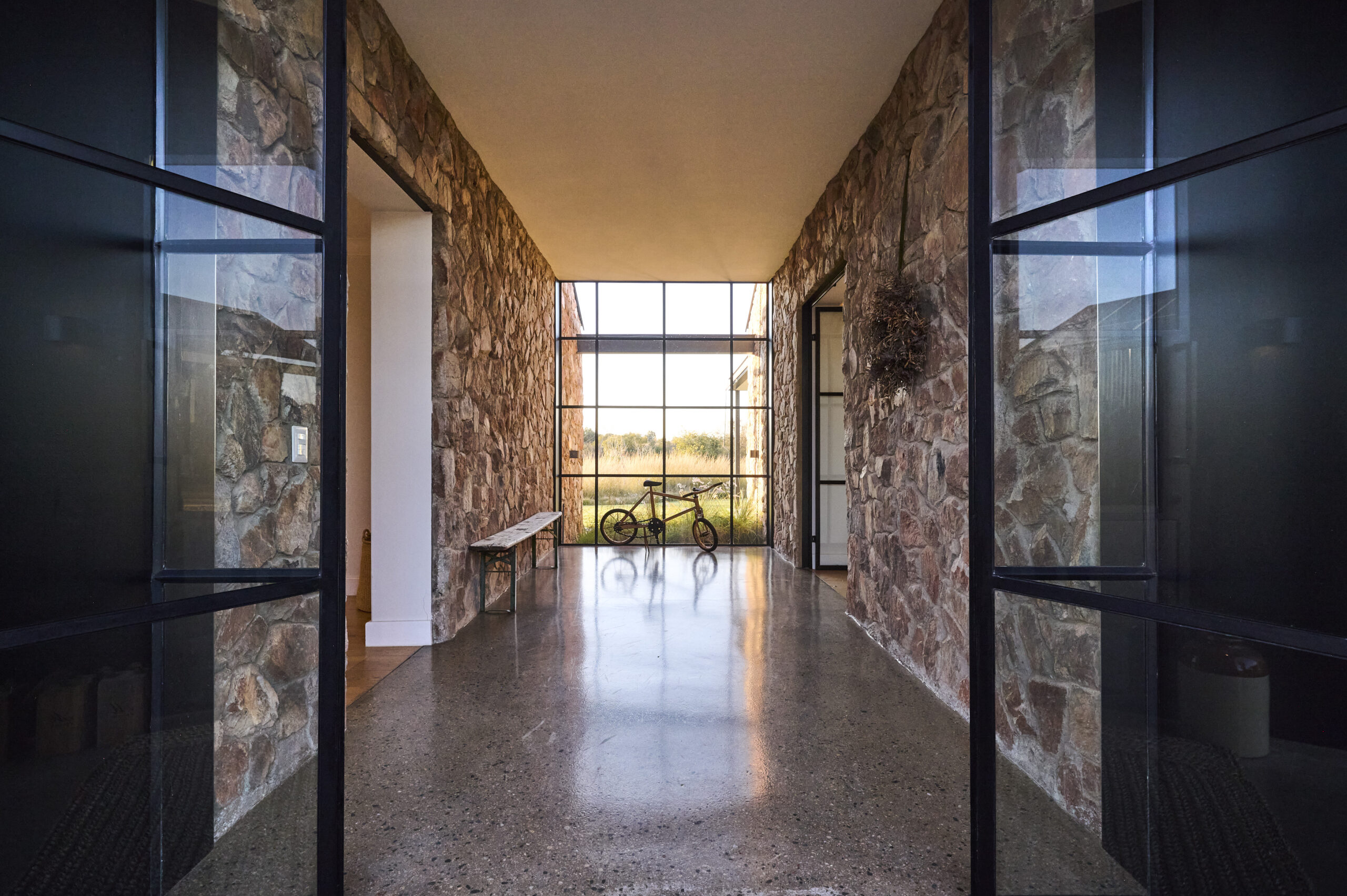
From the moment one enters the steel-framed entrance hall, the architecture directs attention outward. A large north-facing window perfectly frames the Magaliesberg mountains in the distance, creating a live “landscape painting” that shifts in colour and mood with the time of day.
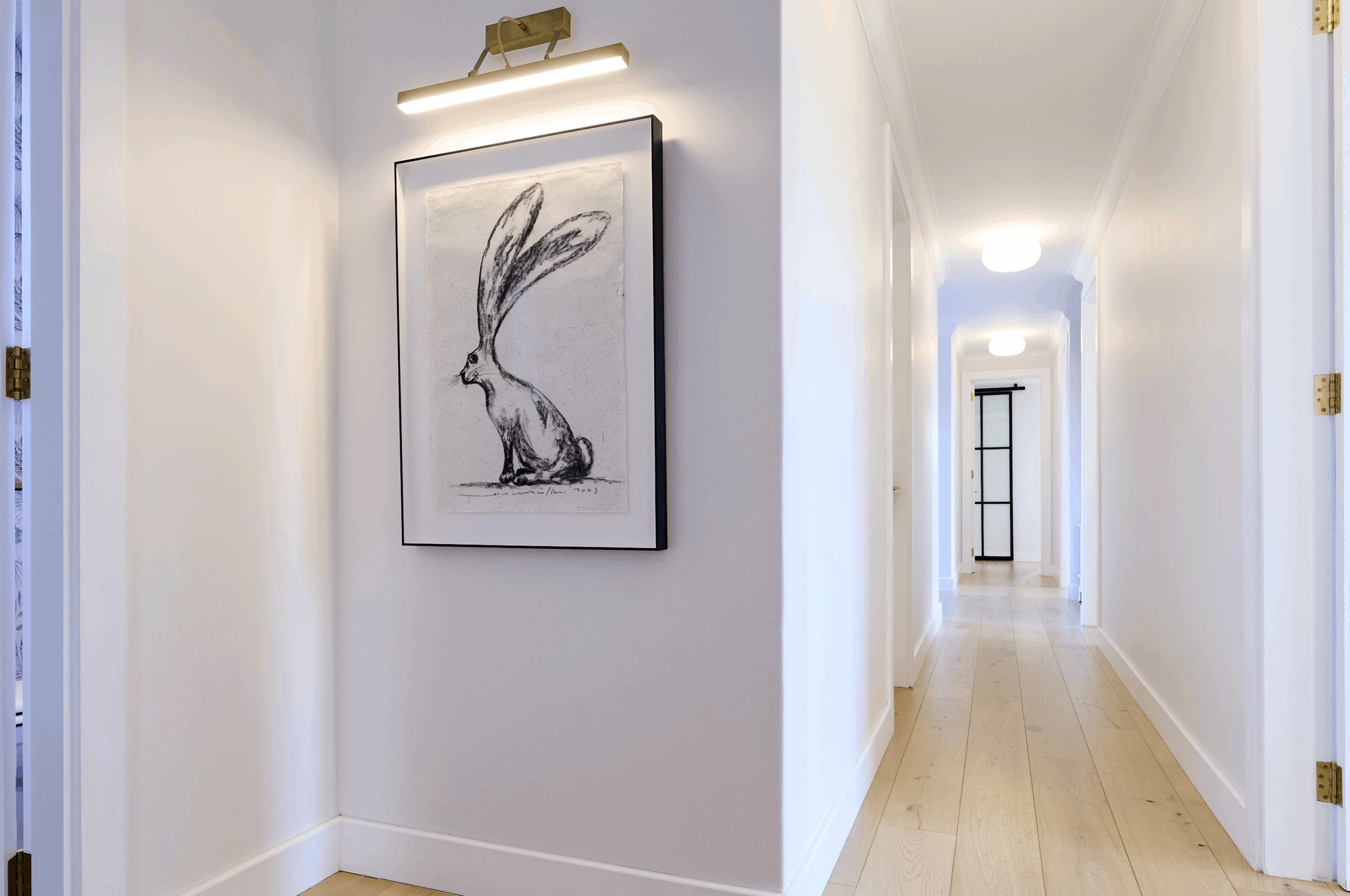
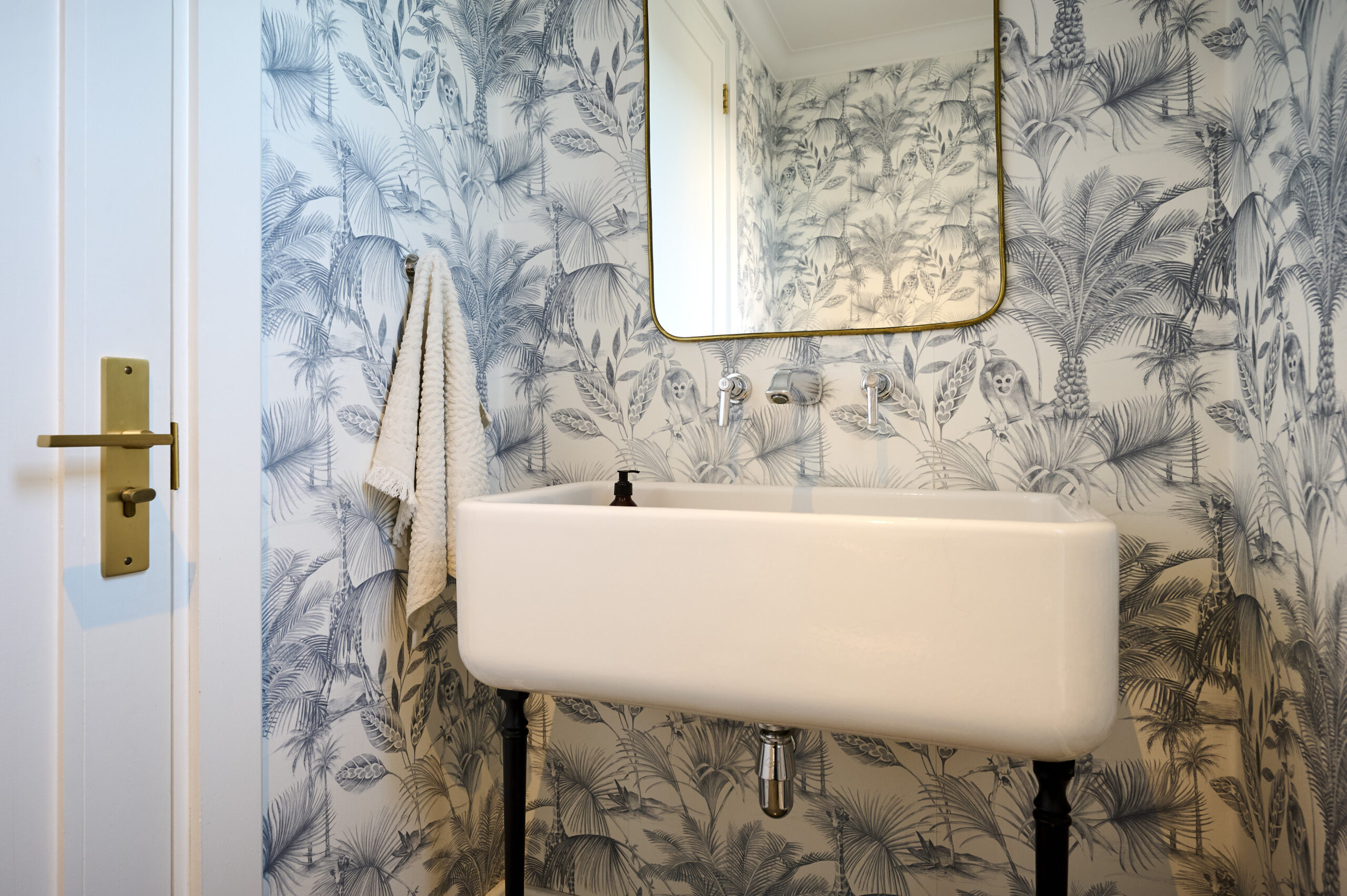
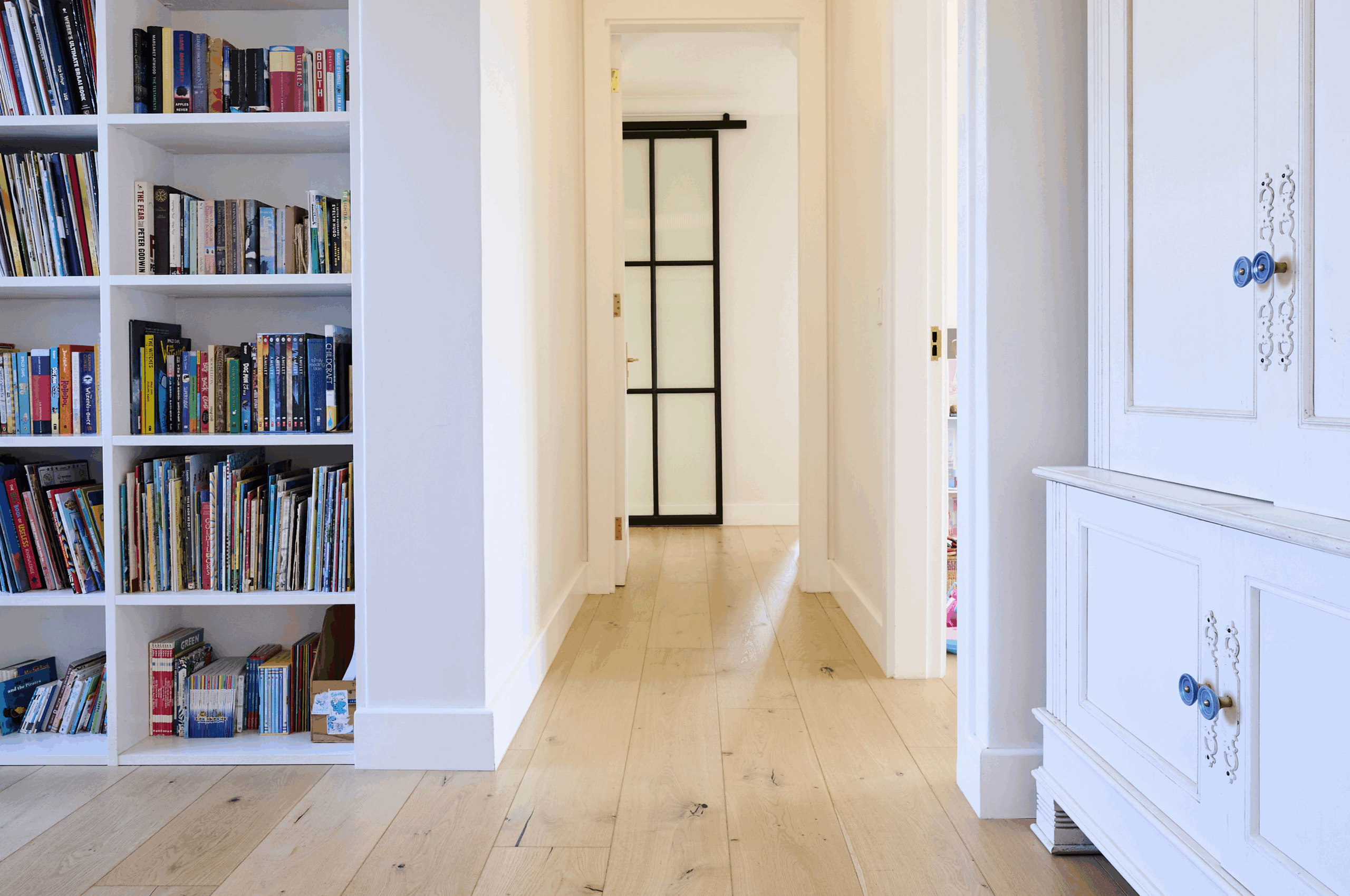
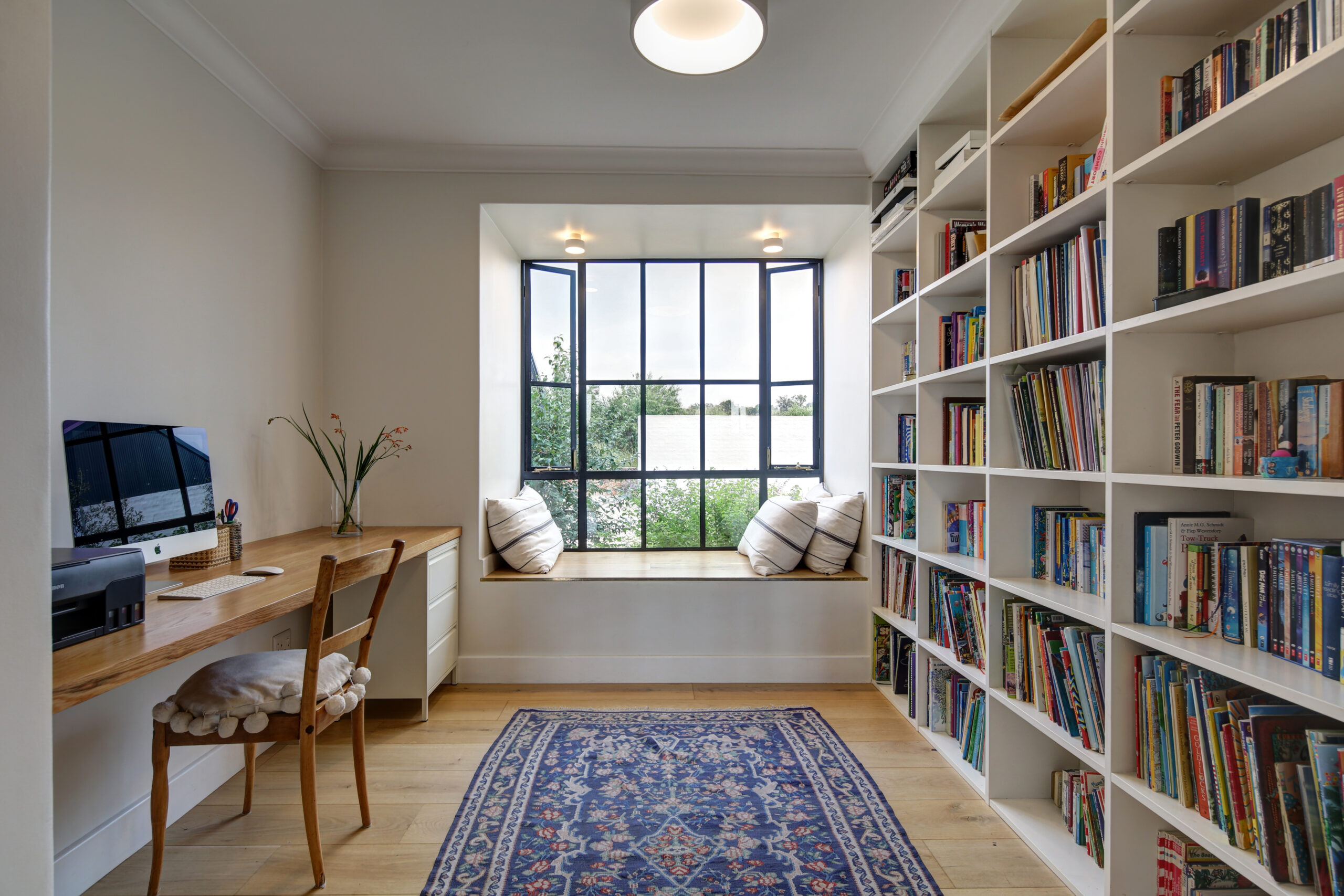
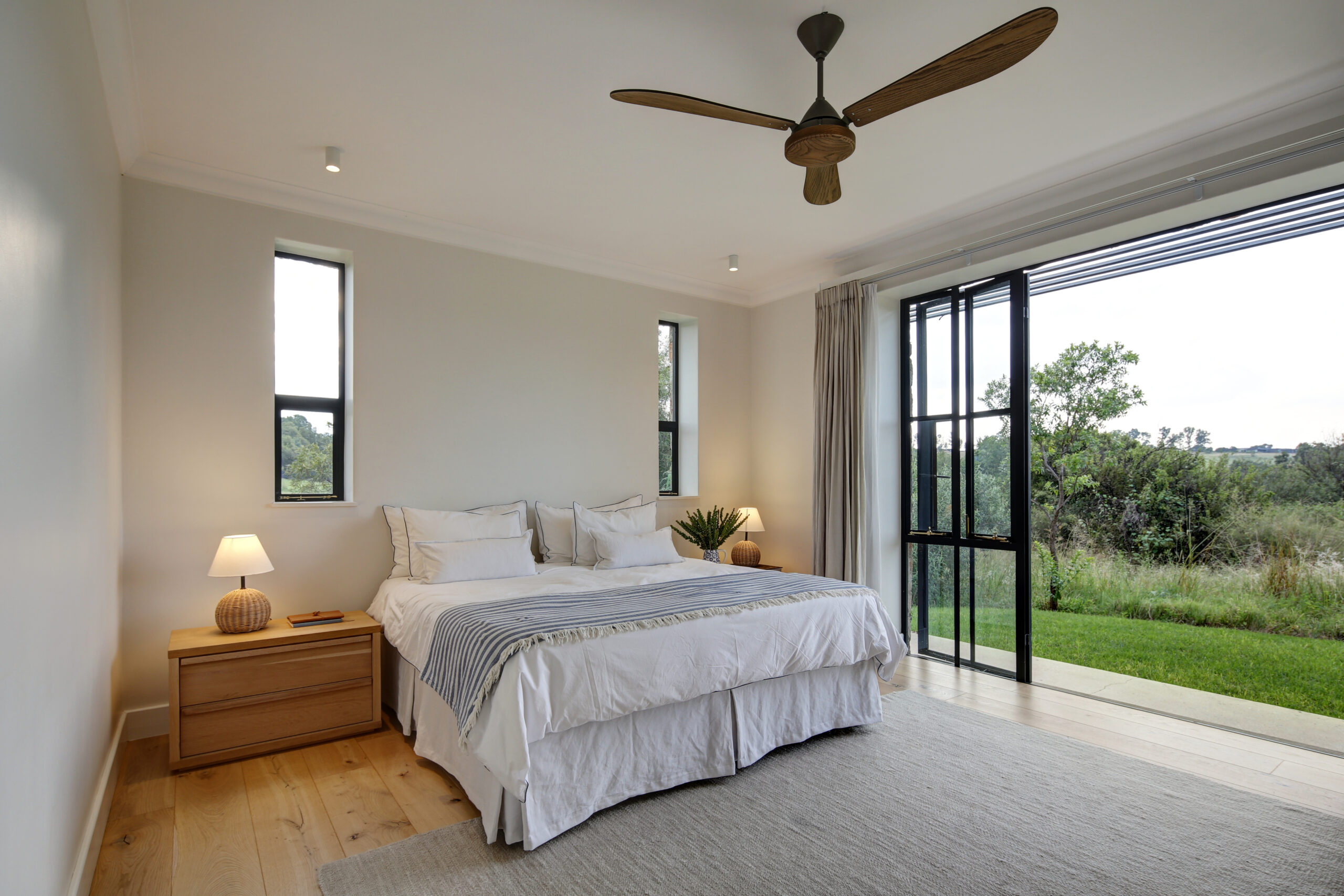
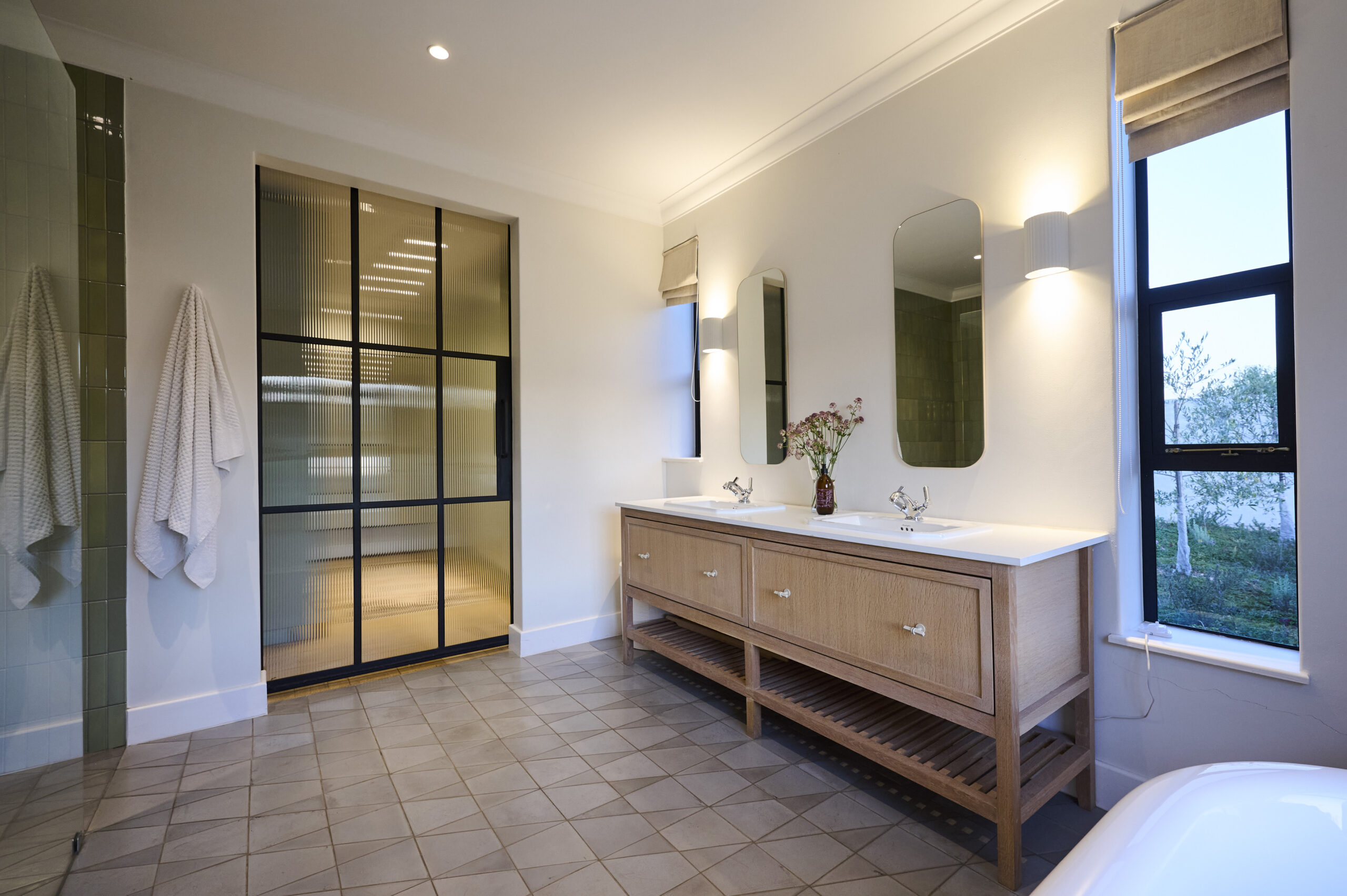
Inside, materials are deliberately restrained: polished concrete and timber floors, clean-lined joinery, and neutral walls ensure that views and natural light remain the focal points. The lofty ceilings further amplify the sense of openness, while the stone exterior’s thickness is subtly echoed in deep window reveals.
Contextual Acknowledgement: The Agricultural Past
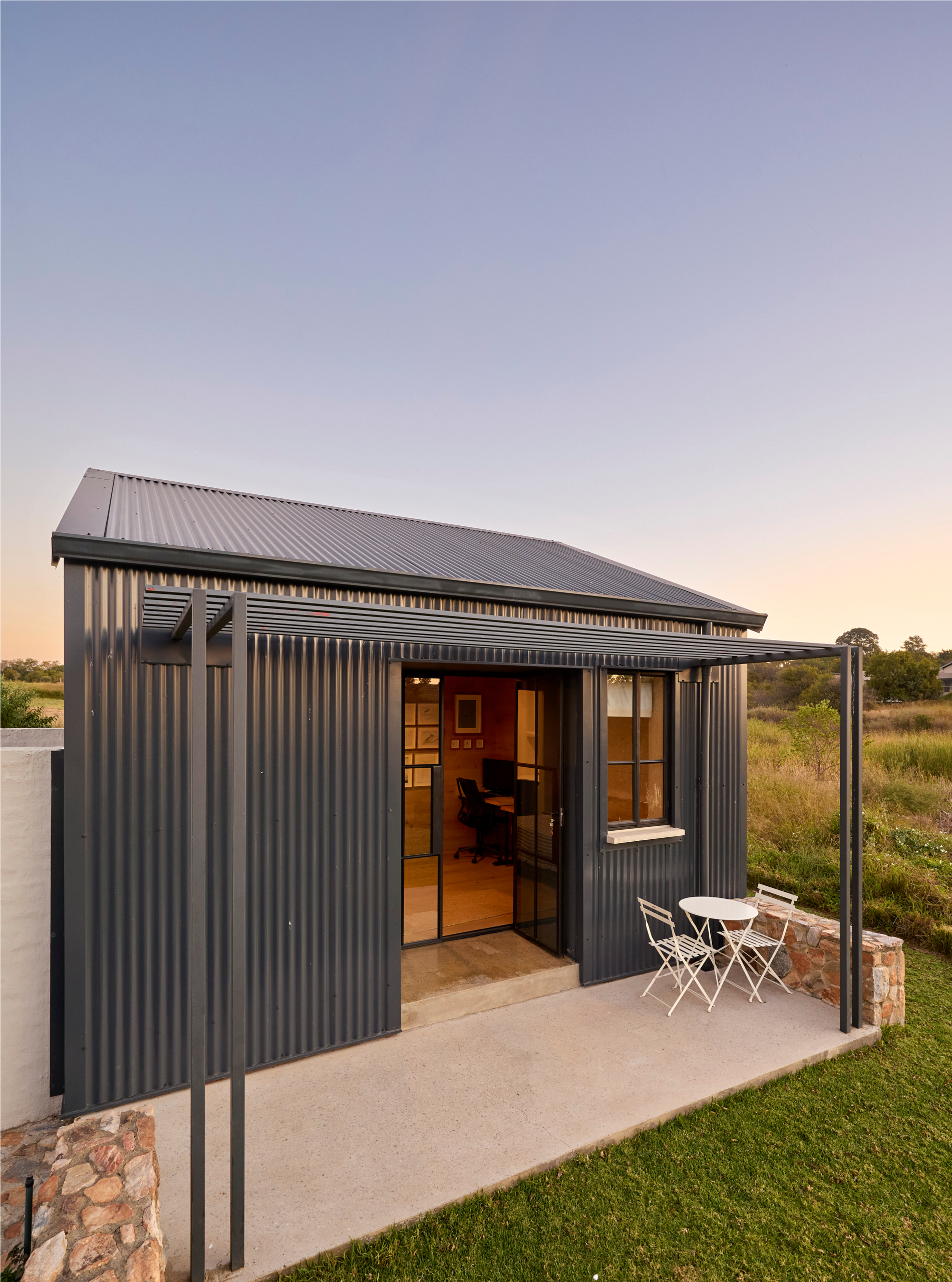
The property sits on land that was once part of a working farm, and this history is acknowledged through the inclusion of a steel-clad outbuilding. With its simple, shed-like form, it pays homage to agricultural structures found across the region. The muted matte finish of the cladding ensures it blends into its surroundings rather than competing visually with the main house.
The Stone House and Its Landscape Integration
The approach to landscaping is as intentional as the building design. Natural vegetation along the riverbank is preserved, while new plantings in the courtyards and near the patio are chosen to complement both the stone and steel elements. This combination creates a seamless transition from built form to natural environment.
From the riverfront, the house reads as part of the landscape. The quartzite’s colour variation, from pale creams to rusted oranges, mirrors the tones of the soil and rocks nearby. Steel elements, painted in a muted tone, allow the stone to remain the defining feature.
The Experience of Place
Walking through The Stone House, one becomes aware of how the building constantly frames and reframes its surroundings. From the entrance hall’s mountain view to the courtyard glimpses, from the patio’s river outlook to the quiet retreat of the bedroom wing, the architecture creates a natural harmony between the house and the environment.
A Grounded, Contextual Home
In every decision, from sourcing quartzite from the same geological formation, to orienting the living spaces towards the views, to acknowledging the site’s agricultural past, The Stone House shows a deliberate commitment to context.
It is not a showpiece for novelty’s sake, but a home that balances permanence and lightness, tradition and modernity, personal memory and site-specific response. The result is a building that is as much a part of its landscape as the river, the slope, and the mountains beyond.
Whether you’re dreaming of a contemporary retreat, a family home rooted in tradition, or a space that speaks to your personal story, if you’re ready to explore what your own “stone house” could be, we’d love to start the conversation. Contact us to begin shaping a home that is as unique as the landscape it belongs to.
Nadine: 082 809 1970 || Studio: 011 025 8318 || email us: meik architects